Interview with Bin Jung: Reflections on Buddhism, Sangha, and Ancestry
April 29, 2025
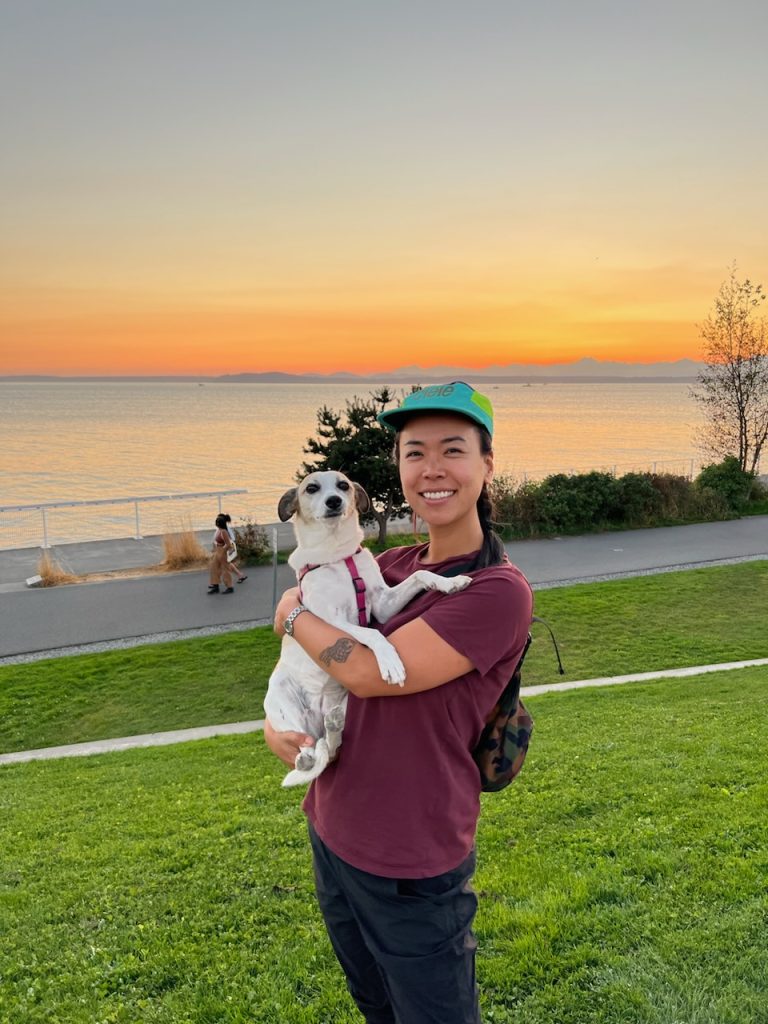
We’re deeply grateful to Bin—zen practitioner, BZC member, and Sangha Council member—who’s brought creativity and heart to BZC’s Instagram since January 2024.
As she wraps up her time in this role, we’re celebrating her contributions with a full interview, where she shares her journey through Buddhism, reflections on Sangha, favorite sutras, remote practice tips, and how her path has deepened her connection to heritage.
This interview is the first in a series highlighting Asian American Buddhist histories and beyond. Enjoy!
Can you tell us a little about you, where you live, and what you do?
My name is Bin Jung, and I use she/her pronouns. I’m originally from New York but have been in Seattle for about six years now. I work for the City of Seattle as an urban planner. These days, my focus is on climate justice, though I’ve also worked in affordable housing policy and development.
What was your first encounter with Buddhism?
I grew up with my father being Buddhist. I’m Korean, and while my father was Buddhist, my mother was Christian. From a very young age, my mom, my brother, and I would go to church, but my father wouldn’t. As I got older, my dad would always say that I should go to Temple and that I should learn about Buddhism, but he never told my brother that. Which I thought was really funny.
My first physical encounter with Buddhism was in my junior year of high school. My dad signed me up for a week-long silent retreat called Kyol Che, which is similar to Rohatsu, at a Korean retreat center (Kwan Um School of Zen) in Rhode Island. He was like, “I can’t go. I have to work, but you should go.” It was probably during winter break and I was like, “Oh, okay.” So I drove up and I still remember it very vividly. It was a beautiful building with beautiful grounds like fields. The people there were, I think, all white, but I don’t think that registered as much in the same ways as it does now. The retreat was filled with long periods of sitting meditation, and we also had practice discussions. I was the youngest person by far.
Do you recall what that first sit was like?
I remember sitting in the Zendo and really trying to notice my thoughts and realizing how I saw the same things again and again,the same themes again and again. It’s funny, I was thinking about my boyfriend at the time or about school or whatever, and I just remember noticing those things each time.
There was also this one ant that I noticed during one period of sitting, slowly crawling across the room. And then once the sitting was over, I tried to find him again and I couldn’t! I was like, “I’ve been looking at you for 30 minutes, and all of a sudden I don’t know where you are!”
What a vivid image! Maybe the ant was a little companion, and by the end was like, “Bin made it through” and then moved on to the next person.
Right?
How did you come to Brooklyn Zen Center? Given your early exposure through your dad and at the Kwan Um Temple retreat, was it something you were looking for at the time?
I’ve always wanted to be part of a Zen center, but I was never in one place long enough to commit, or I didn’t have the time. In 2015 I moved back to Brooklyn after living abroad in Mexico and I found Brooklyn Zen Center. I went specifically to a Saturday Morning Program and what stood out to me was that they also mentioned the Love Circle Sangha, a BIPOC sangha, and I was really encouraged by that. Other Zen centers I’d looked at didn’t have language that explicitly included BIPOC or people of color.
I remember meeting people like Yoko, Ryan, Kaishin, and Koan (who now lives in Texas) and a bunch of others. I remember feeling good there and feeling like it was something that I would come back to. So then I started just coming back regularly and getting more and more familiar and deeper into the practice.
So I think part of it was just wanting to reconnect with something I’d known about since childhood but hadn’t been able to pursue, but wanting to have that be part of my life. The community was a big part of it.
I actually met my partner, my now husband, at Love Circle Sangha. I feel that’s a cosmic moment because my parents actually met at a Buddhist temple in Korea. My dad was there for a year trying to be a monk, and then my mom was visiting the temple from Seoul. She met him on the temple grounds and they started talking. She went back to Seoul and they started exchanging letters. My dad ultimately didn’t become a monk, and they ended up getting married. So at least that’s the story, that’s the lore.
Wow, thank you for sharing that sweet story and incredible connection!
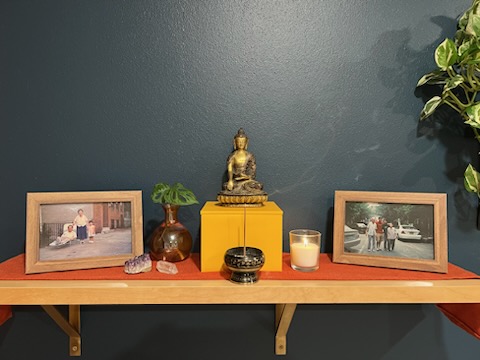
How would you describe your Buddhist practice?
I think over time, it’s become a way to connect with my ancestry and family. My dad’s side live in the US, and my mom’s side all live in Korea. Some Korean traditions that are really Buddhist at heart, like honoring ancestors during jesa, or lighting incense at important cultural events. And I feel it is a real way to connect with my heritage and with my lineage.
And so for me, the practice of Buddhism has become fuller to encompass a lot of ancestry and healing. It is a lot of knowledge and bringing in of family that I don’t know, people I don’t know, and a history I don’t know. And making it all part of my reality now.
What you said really makes the word “practice” so much more expansive than what the word evokes in a Western or American context.
Yeah, it’s deeply personal. My parents and I don’t have a relationship now, we don’t talk, due to their anti-Black racism and refusal to accept my partner, who is Black. And I really leaned into my practice, and my partner and my shared practice, to make that decision and step into our life together. So practicing Buddhism and having an altar practice and learning more about Korean history and the experience of Koreans from the 1950s on has been really healing and really nourishing because it helps fill in a lot of gaps from my own family history. I don’t know anyone beyond my grandparents. A lot is lost and my parents have never really shared much about their past lives in Korea. Even though I don’t talk with my parents, my relationship with them is still evolving, and that took a lot of time to get to.
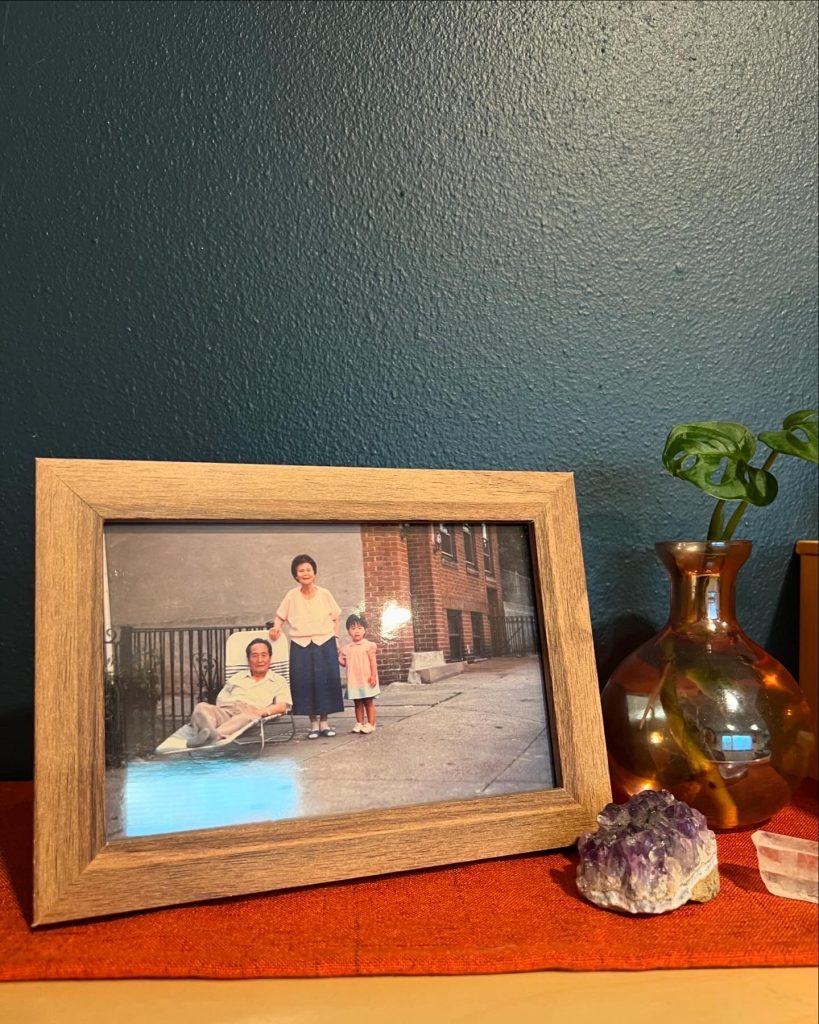
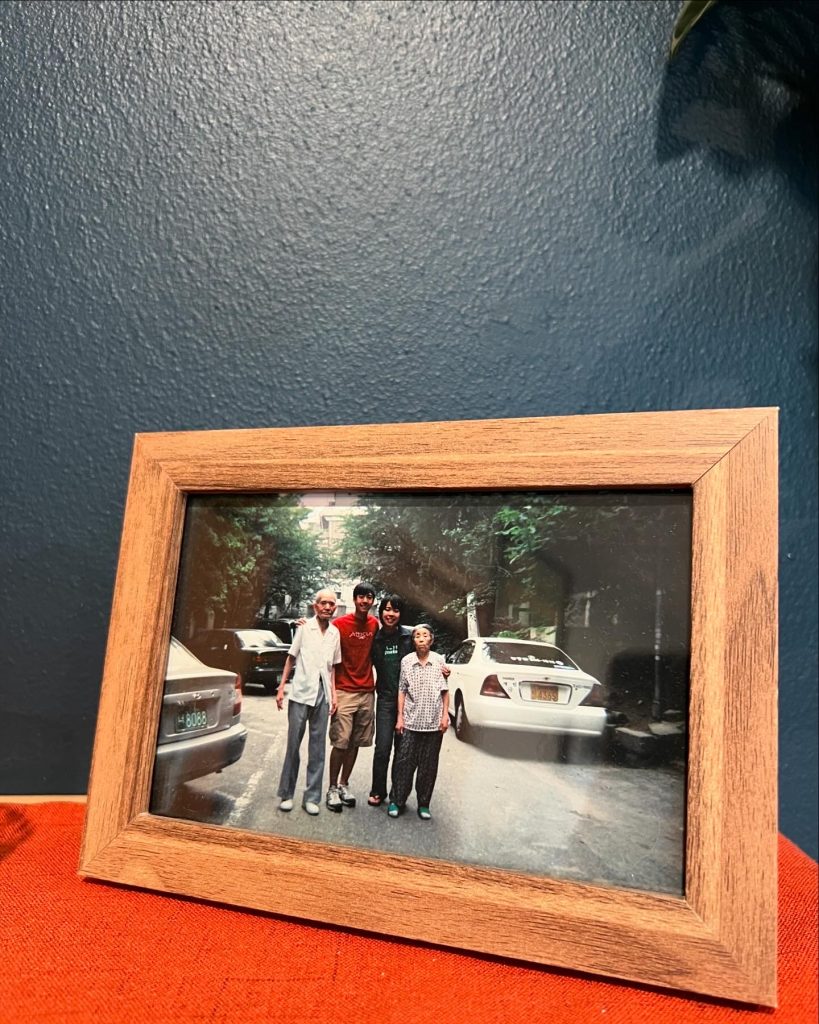
What are some ways you go about learning to fill in the gaps?
I’ve been looking, researching, reading, and seeking out texts from the University of Washington library. Right now, I’m focusing on a couple of books I have on hold at the library, trying to understand Japanese imperialism, the colonization of Korea, and the intersections between Korean and Japanese Buddhism. I’m not in school anymore—I have a regular job—so it’s been a bit slow-moving. I also came across a 2024 symposium at TCU called “Korea: The First Forever War” which was amazing.
How do you understand sangha?
I think about sangha a lot, especially when it comes to the idea of virtual sangha—whether your community is physically close or spread out. I practiced at Brooklyn Zen Center for about three or four years, and then when I moved to Seattle, it felt like a real rupture. I wasn’t able to attend since it wasn’t yet hybrid at the time, and I felt like I lost this community that had become really close to me. It was heartbreaking. But when the hybrid format started during COVID, it was a lifeline, reconnecting me with the Zen Center and the Sangha.
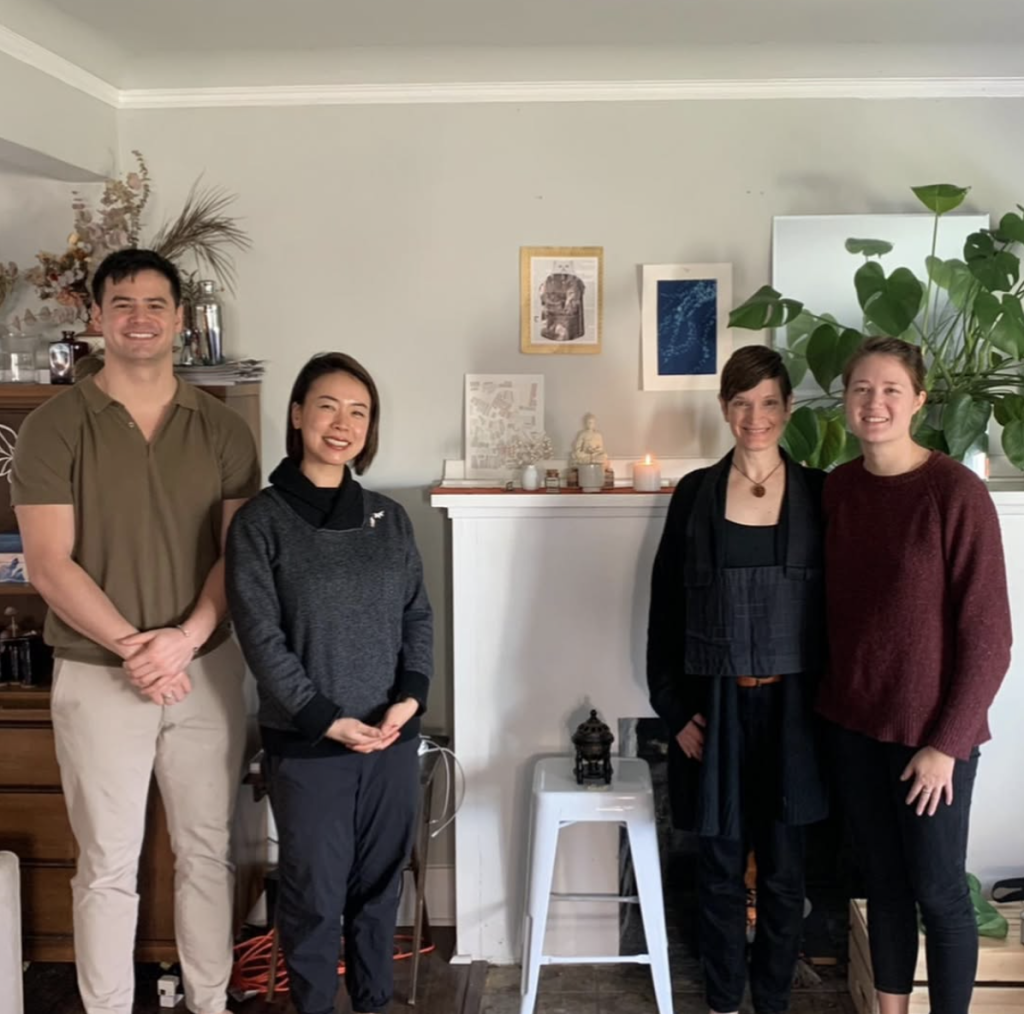
In my experience, sangha definitely expands beyond the temple walls. Here in Seattle, I’ve found two people familiar with BZC who had also attended programs there, and we meet weekly to sit together. Just having that shared knowledge of BZC has been incredibly sustaining for our practice.
Sometimes I think of Sangha as something very close-knit, and other times it expands to include everyone. But then I get hurt or feel sad, and it becomes small again. For a while I thought a lot about the questions we ask people to prove that they are worthy of being part of the sangha. But I’ve come to feel that everyone is inherently part of it. So what’s the impact of that? Of everyone being sangha? What does it feel like in terms of community building and resilience?
Are these questions that come from the challenges of being remote?
They come from personal thoughts from being remote but also from just being in the world. We’re trying to free all beings from suffering, but who is that all? Is it everybody? Is it the fascists? Do they come with us? Is it my job to bring them with us? In society, we have this idea of the “deserving poor”—do you deserve services or not? But the answer is, everyone does. So I think that’s the challenge I face with the Sangha: everyone is part of it. There’s no good or bad, no value to be proven. It just is. You don’t have to prove anything. Just being here already gives you inherent value.
I took Greg’s Karma and Collective Liberation class and it was really great. I remember one session where he really talked about just being in right relationship with people. I think the hard thing for me in terms of Buddha’s commitment is, can I really commit to all these people? That’s the real question. If we can commit to that, then it’s about me—not others, but me. How can I be? I would also get tripped up on the idea of, “Well, if I’m doing it and they’re not, then that’s not fair. I’m putting in all this effort.” But that’s a false gauge. It’s not about tit-for-tat. It’s about, “Can I do this? I want to do this because it aligns with my values, my ethics, and my commitment to do it, regardless of what’s given back.”
Thank you for sharing such deep and ethical questions regarding sangha and community. Are there other Buddhist conundrums you’re grappling with?
A burning question for me is how can I, with racism, with sexism, with all of these things, get to a point where it’s about me, but it’s not about me. It is personal, when someone is being racist against me, but it is their own conditioning and it’s more about them than it is about me. So for me, it’s so hard to be there in that place and know how to act, how to take this. Who am I? Who am I in this moment? How do I not ruminate over this for decades? Because I think all the racialized trauma we’ve had since we were so little, it’s always there, and that is the evergreen conundrum. How do I exist in this body and know that this racism, this classism or sexism, whatever it is, is about me, but it’s not about me. How am I able to navigate that and be in that?
Something I also work with all the time is that there’s the duality, that there’s no good or bad that we can’t operate in these dualities. I mean, there’s so many, but I think that’s one that I always come back to that I feel like is super rich. There are dualities everywhere, and I put myself in them without even knowing. They’re so well worn.
You mentioned earlier about Kosen Greg Snyder’s Karma and Liberation class. Are there other classes that have impacted you?
I took the precepts class with Charlie Sensei (Charlie Korin Pokorny) that just ended, which was lovely as well. The way they taught the precepts felt like it had evolved over all the teachings they’ve given over the years, so that was really enriching. There was a wealth of knowledge and readings in the class, but what I really appreciated was the way Charlie reframed the precepts. They worked hard to shift the focus from “don’t do this” to “how can this inspire?” For example, instead of simply saying, “A disciple of Buddha does not kill,” it became, “I will support life” or “I will encourage life.” I really appreciated that reframing. The precepts deepened the things I’ve been saying for years, things I thought I already knew, but it highlighted a lot of nuances and revealed just how truly rich they are, not prescriptive at all.
Do you have any advice for the sangha, especially for those who are new to BZC or for those who are participating remotely?
Being remote can be hard, but I draw from my experiences going in person to BZC, sitting together, and going to dharma talks and to be there in community. So I would say that if you can, go in person, just to be there for the sitting and to be there in community, in Sangha.
I felt my practice really deepened once I committed to going there on Saturdays. That was helped by also making the commitment of not going out on Friday night, so setting yourself up for success. When I was younger, I’d try to go out on Friday night and then attend Saturday morning at the center, but it just wasn’t working!
For those who can’t attend in person, creating your own rituals before and after the Dharma talk can also be grounding—lighting incense, sitting, doing bows, and chanting when you can. Even though it might not be at the same time as the rest of the sangha, it still creates a sense of connection.
Oh, wow, that could be really helpful for remote participants, and others. That participating in ritual can be a powerful way to connect with the sangha in connecting to generations of people experiencing incense, its smoke and scent fill the space. It’s truly asynchronous in that way.
Yes! People have been lighting incense for millennia. It’s such a simple thing, but if you think about it, how many times has someone lit incense? There’s someone in my family that I don’t know that has lit incense. It’s just so connecting across time.
Is there a particular chant or sutra you’re drawn to?
The Eihei Koso Hotsuganmon chant is always really lovely. I remember talking to Yoko and she was like, “that’s a favorite!” It’s the chant we do before Dharma talks, and I think it’s really wonderful because it talks about Buddha and ancestors. All Buddha and ancestors of the past are the same as we, and we in the future shall be Buddha and ancestors, and I just think that’s a really lovely way to remember and place yourself in this timeline and in this kind of broader understanding. It feels like it really brings you, as a chanter, in, I think more so than some of the other chants.
What are your thoughts on the practice of chanting? There is such a mix in Soto Zen – some translated to English, some are in Chinese, Japanese, Pali. I find that it’s a topic people want to discuss but they’re feeling shy to do so, to ask questions about it, feeling weird to bow and the monotonous quality of chanting or wishing for something more melodic or song-like.
I love chanting. I think chanting is great. I grew up bowing, and chanting in a monotone – that’s how Korean chants would be. So it’s something that I associate with Buddhism, and it’s what I know.I used to feel weird about chanting in other languages that are not English. I felt like white people specifically love chanting in non-English languages, which is weird to me. But the refuges in Pali, they’re so wonderful to chant at the end of the day.
What Buddhist book—whether explicitly Buddhist or not—are you reading right now?
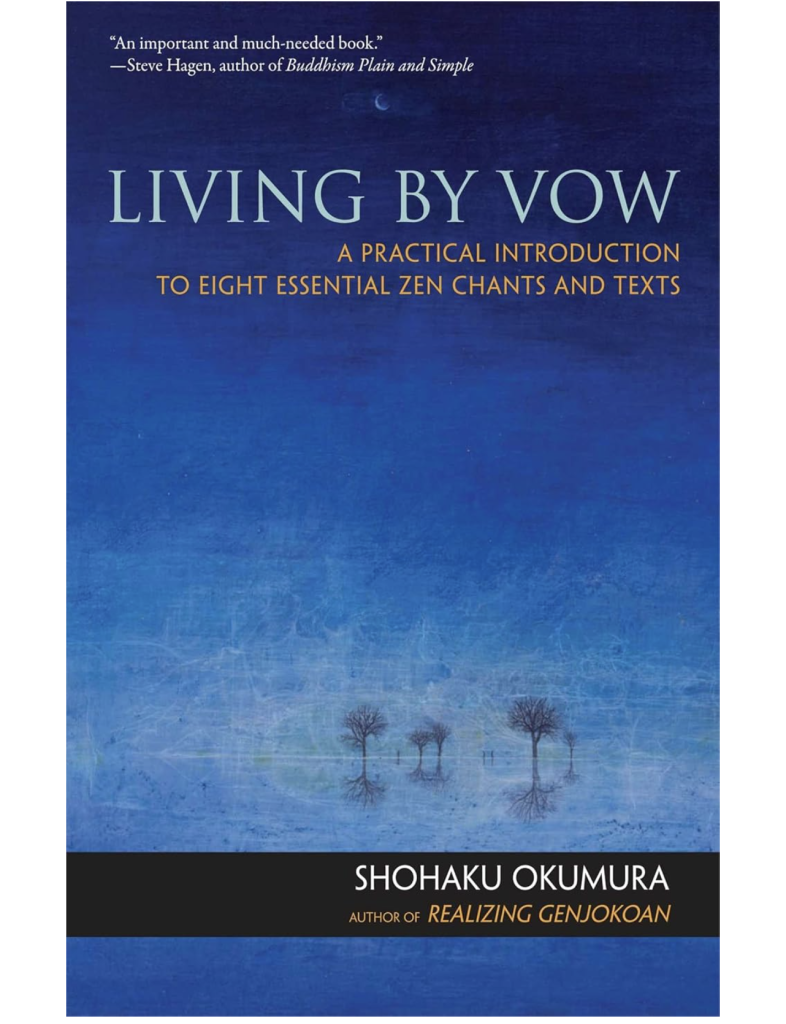
I’m always lightly reading Living by Vow by Shohaku Okamura, though I haven’t finished it yet, so I can’t speak to it fully.
Can you tell us more about what you’ve read so far?
Well, he has several chapters, and he goes through the precepts, exploring what it means to live by vow. Buddhists take these vows, and he breaks them down, offering his own interpretations. I think he also includes the Heart Sutra and some other chants, explaining them in depth. His style is just wonderful—really accessible.
I’ve been leaning more into podcasts lately, though.
Which podcasts?
I always listen to the BZC podcast, but there’s another one I’ve enjoyed called Opening Dharma Access: Listening to BIPOC Teachers & Practitioners. (BZC Admin Director) Ryan Lee Wong was on an episode, which was great.The podcast is hosted by Rev Liên Shutt. It’s really wonderful, and I appreciate the Asian American perspective in Buddhist practice. She does a fantastic job. I listen to that one regularly.
Is there anything else about your Buddhist origin story or anything we’ve discussed today that you’d like to expand on? Something you hope for, or wish to share?
What BZC is doing to highlight Asian American and BIPOC voices is so crucial. There’s so many times that I’ve spoken with my Asian American friends and they are curious or want to know about Buddhism or have experienced Buddhism and feel this alienation because it’s always through this white lens, but they feel like, This is something that I should know because I’m Asian. But then how would I know it if no one’s taught it to me? But I also feel weird about it being taught through this white perspective back to me. But it’s all there and we’re all just curious.
I think the time is now to bring these stories up front and bring all of us in.
What I also want to say is—Buddhism is everywhere and in everything. I think I’ve come to realize but it’s not only about sitting. It’s about all the time. Even if I don’t sit for long or sit frequently, it’s not truly only about that. I think in other traditions, it’s more about ethics and the actions you take, rather than just sitting for days. So I’ve definitely broadened and expanded my understanding of Buddhism and what it looks like to me. Perhaps because I didn’t have Brooklyn Zen Center to go to, I wasn’t there in person. In some ways, being remote has also been expansive or has been more opening too.
Thank you so much Bin. We’re so grateful to you for sharing your incredible journey and story with us, highlighting critical but overlooked areas of lived experience, ancestry, political histories, and interconnected notions of practice, in many different facets of life.
Thank you, readers, for engaging in the interview. Be sure to stay tuned for more stories on Asian American Buddhist origin stories and beyond in our newsletters and website!