Sangha Day: What We Created Together
December 1, 2025
“When I woke up this morning the impression that remains is one of sweetness,” wrote Clare the day after Sangha Day.
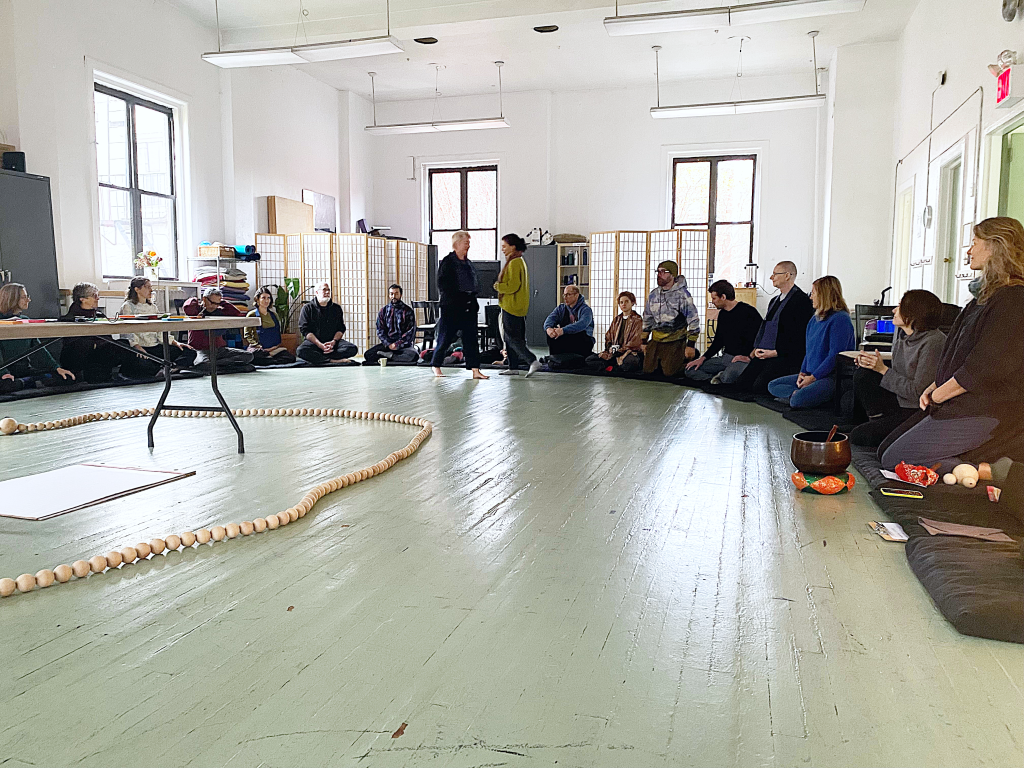
Forty-one people gathered at Boundless Mind Temple on November 22 for Sangha Day to create conversations and activities around what mattered most: grief and forgiveness, political action, crafting, collective dreaming, music, somatic practice, spiritual friendship, and more.
The Setting
The zendo, tea area, dokusan room, and tree room came together with many hands helping. We sat zazen in a circle, facing inward toward one another. Sara Lamm led a Community Mala practice with giant wooden beads, adapted for our large group. We invited in our ancestors and all parts of ourselves, chanting together.
After reviewing our Community Agreements, we tried something new: Open Space Technology. Despite the name, it’s not about tech at all, but rather an organic, self-organizing approach where participants propose and gather around topics that call to them. After a few moments of confusion and apprehension, people dove in. What emerged was a rich tapestry of the sangha’s interests, concerns, and dreams.
What the Sangha Chose to Explore
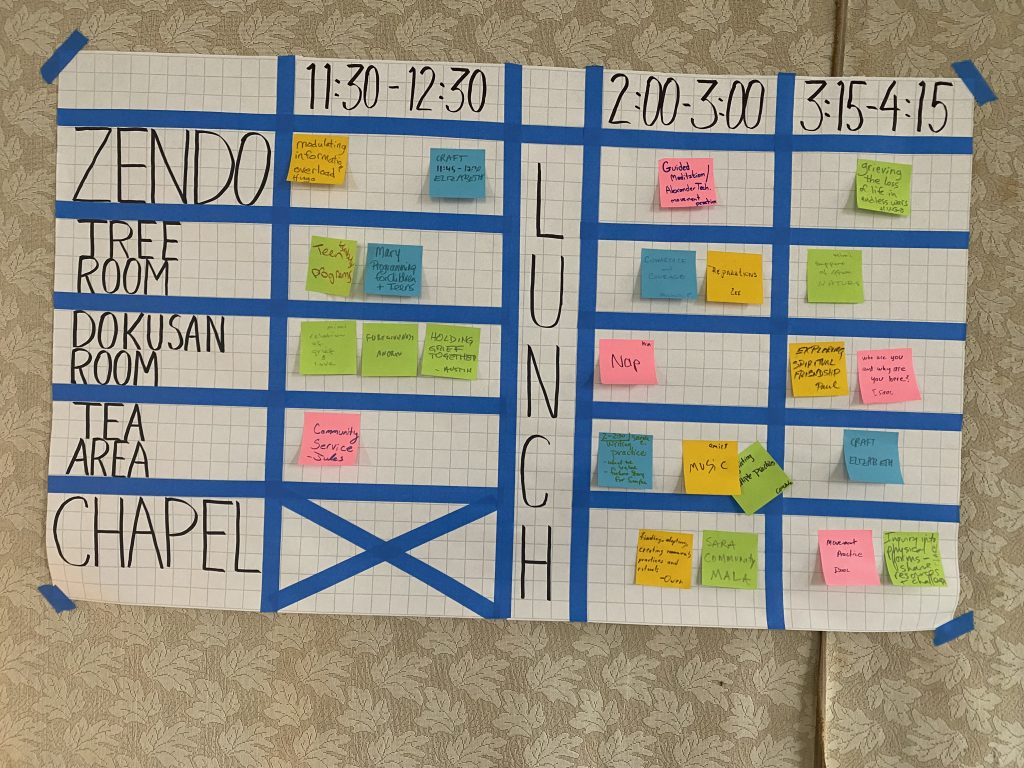
Open Space Technology invites participants to propose and self-organize around topics that call to them. Here’s what arose:
Hugo created space for exploring information overload, and later, for grieving the loss of life in endless wars.
Elizabeth guided crafting where participants drew leaves on cardboard, cut them out, and wrote on them something they wanted to drop or let go of. She then ground these leaves into clay that the group used to create something new.
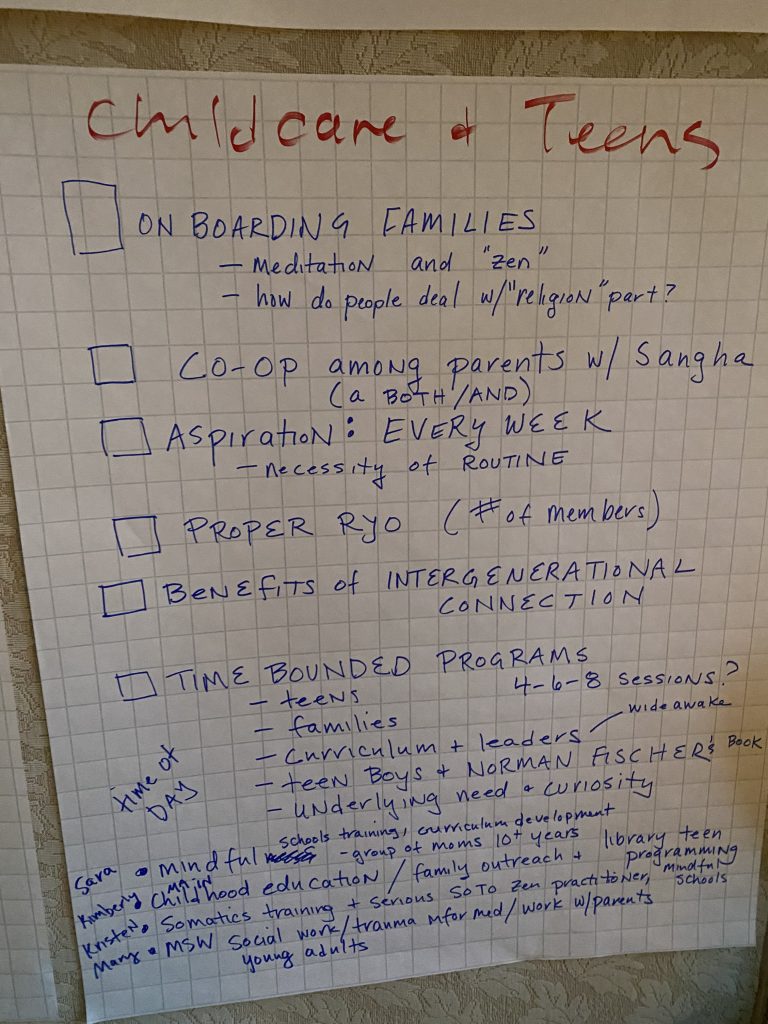
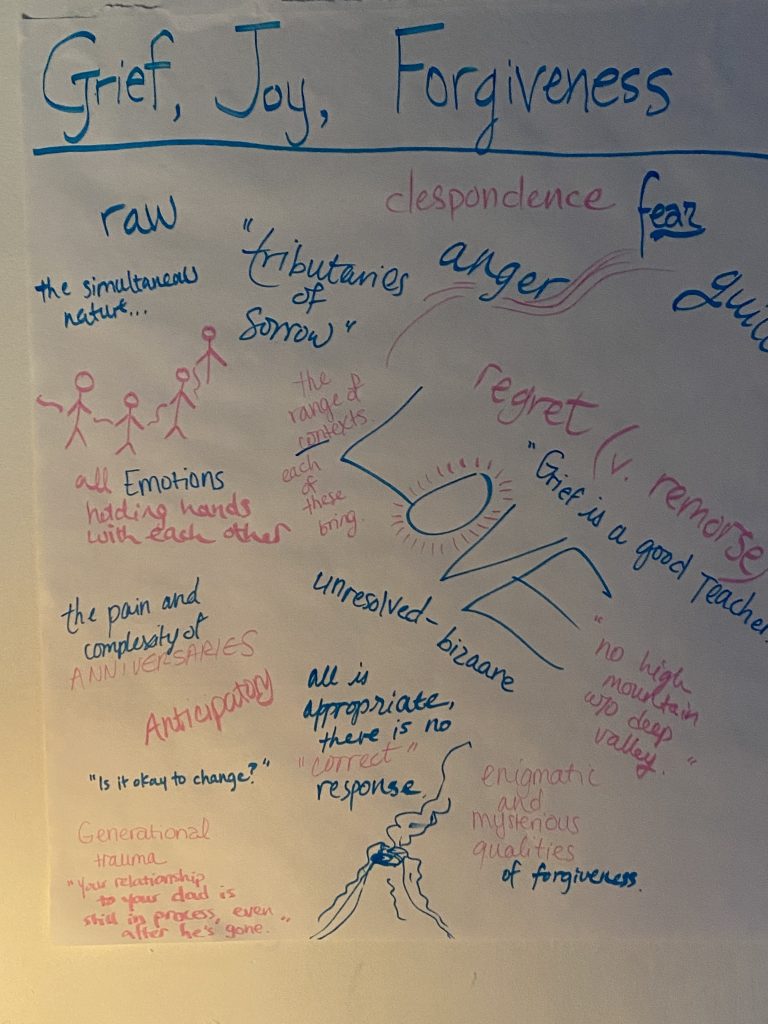
Mary and Kymberly gathered to discuss programming for children and teens. Mimi, Andrew, and Austin held space for grief, love, and forgiveness together.
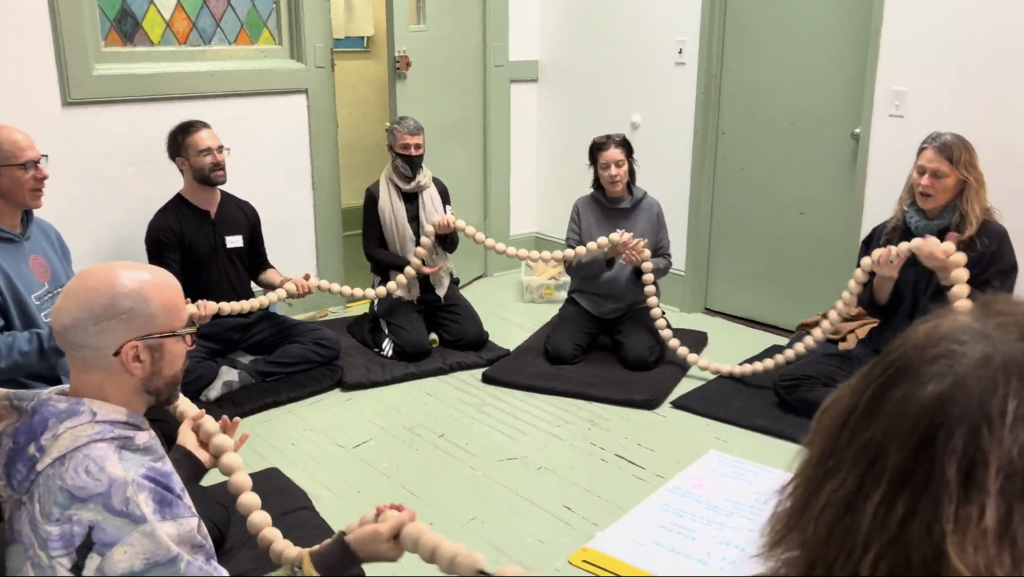
Jules explored community service. Michelle and others discussed cowardice and courage. Lee facilitated conversation on reparations. Owen invited the group to find, adopt, and create communal practices and rituals. Sara led a community mala practice.
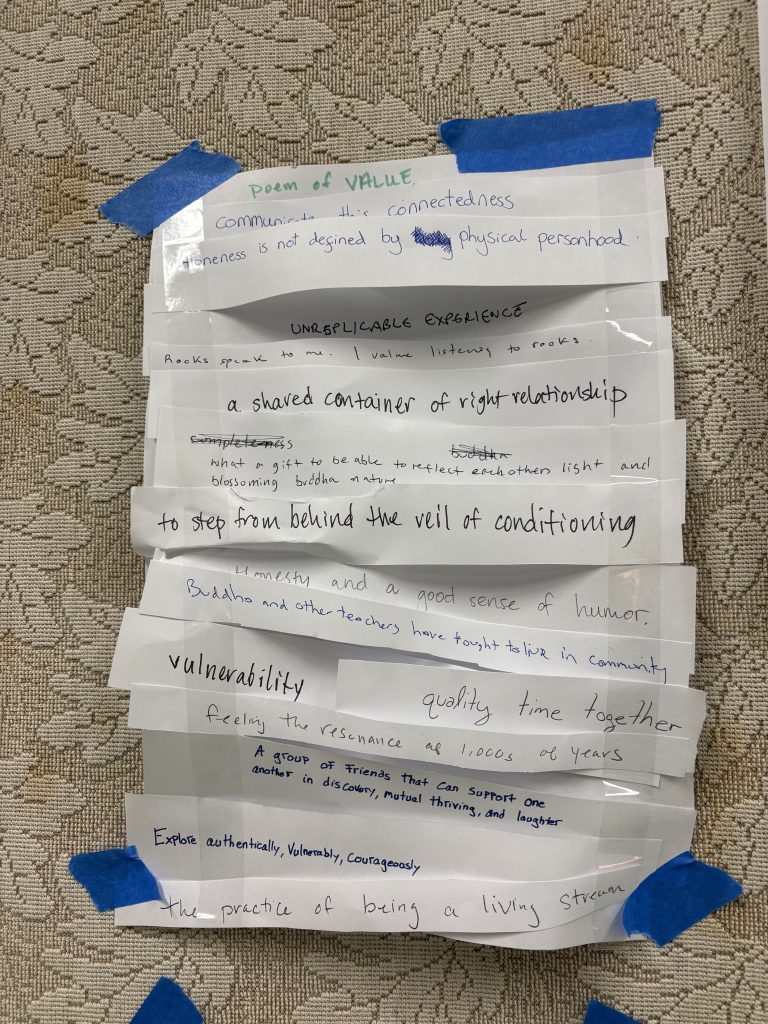
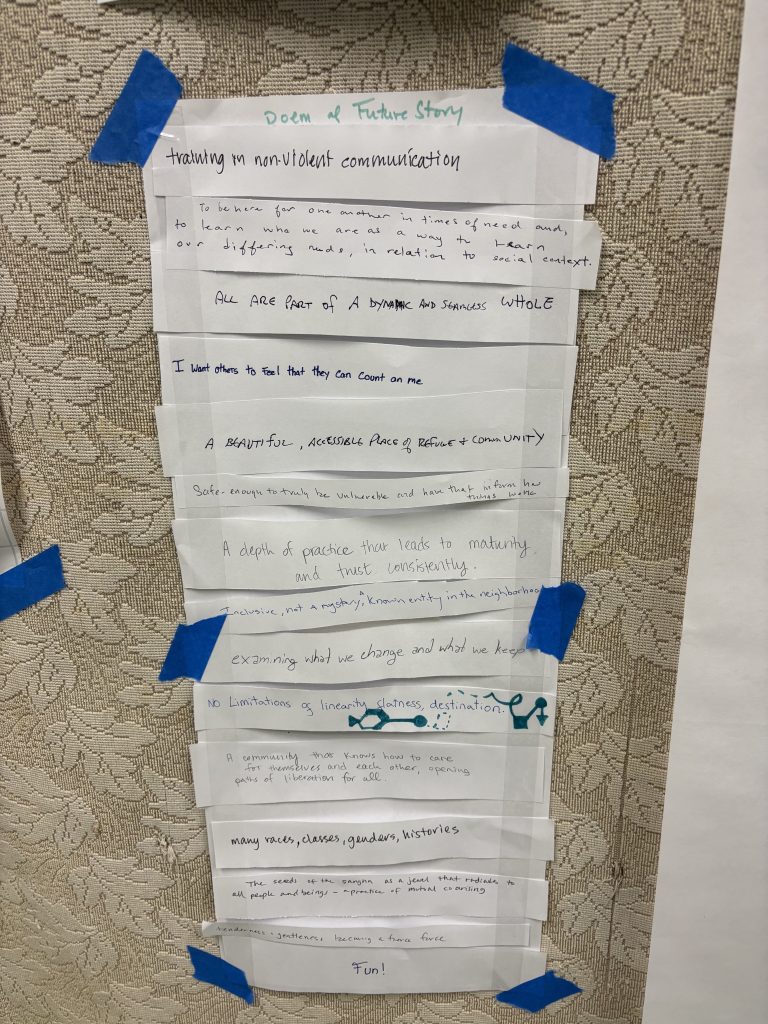
Sarah Sensei guided writing practice on what we value and what the future story is for our sangha. Participants’ visions were written on strips of paper that became a collective poem of hopes and intentions. Read the transcriptions here.
Emily and Constantine explored music and integrating multiple practices. Ian created space for napping
(rest as practice!).
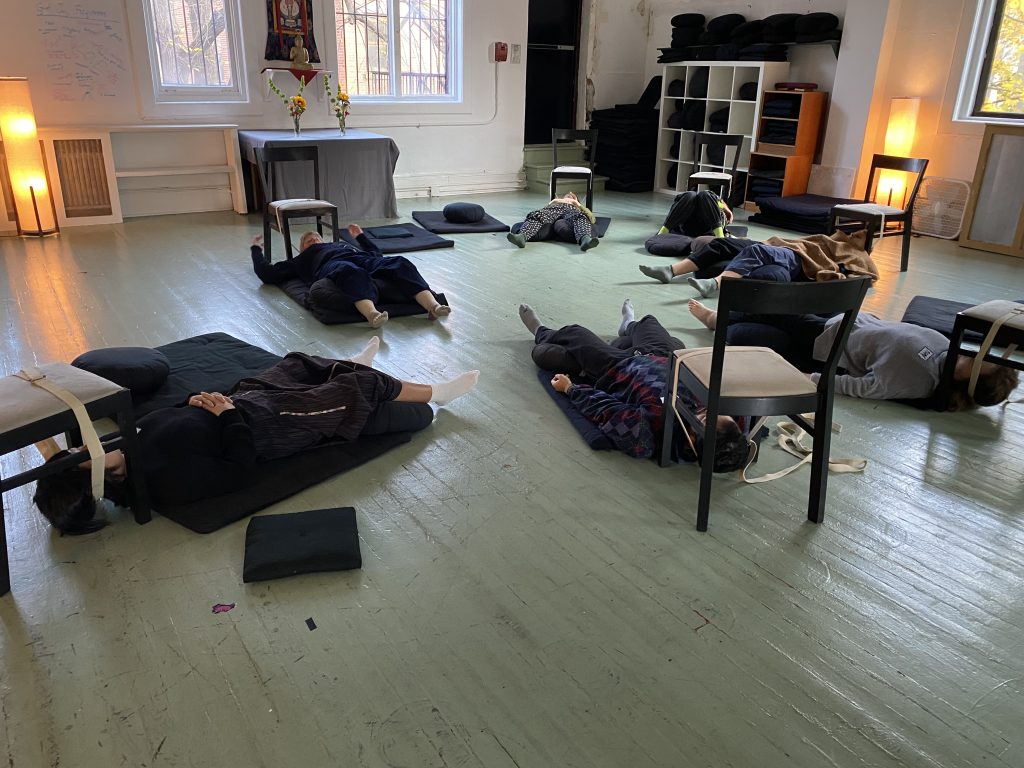
Kristen and Lūk guided Alexander technique meditation and somatic movement practices. Paul and Isaac facilitated conversation on spiritual friendship, asking: who are you, and why are you here?
Mark and Austin took on political action in a Buddhist way.
People moved between offerings as they wished—some staying deep with one conversation, others following their interests across multiple sessions.
Bees and Butterflies
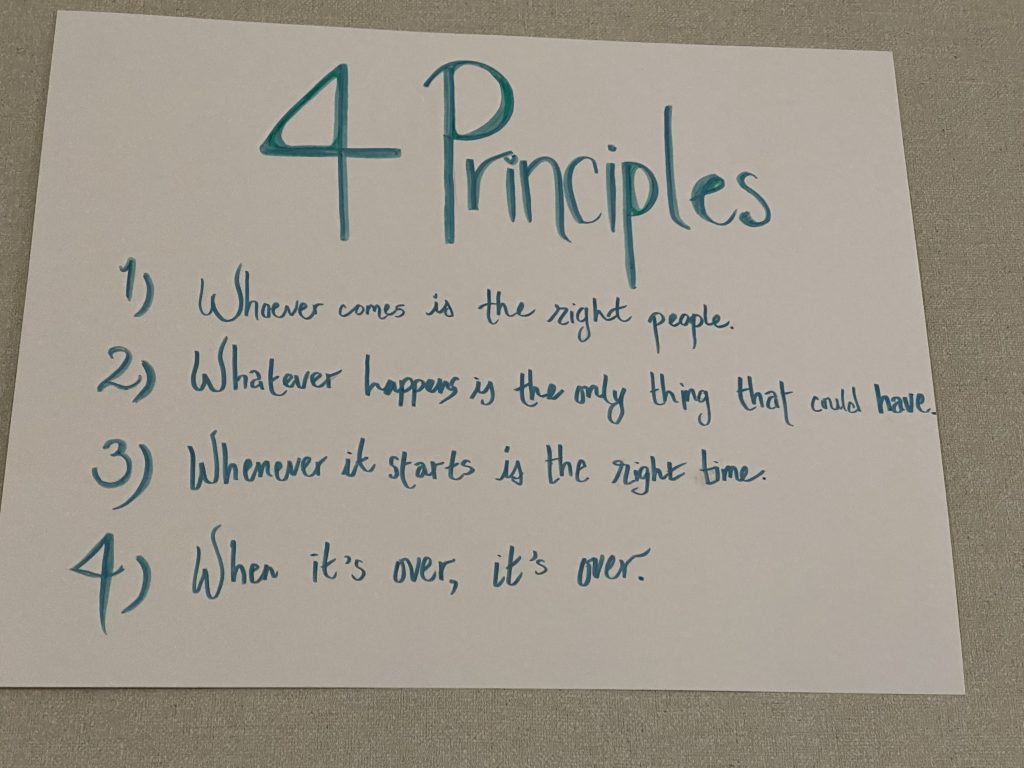
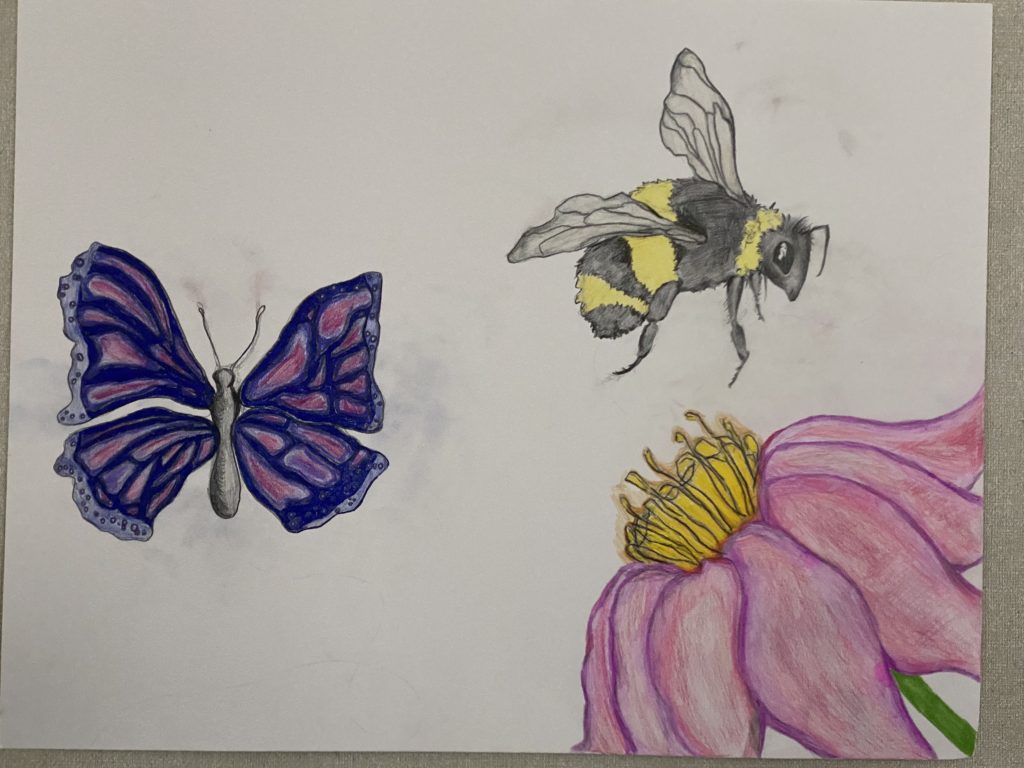
Open Space’s guiding principles: whoever comes is the right people, whatever happens is the only thing that could have, whenever it starts is the right time, when it’s over, it’s over. The Open Space format also invited two ways of participating: people could be bees, going deep and staying with one conversation or activity, or they could be butterflies, flitting about following their own interests and timing. Both approaches were honored. Both were practice.
Food and Care
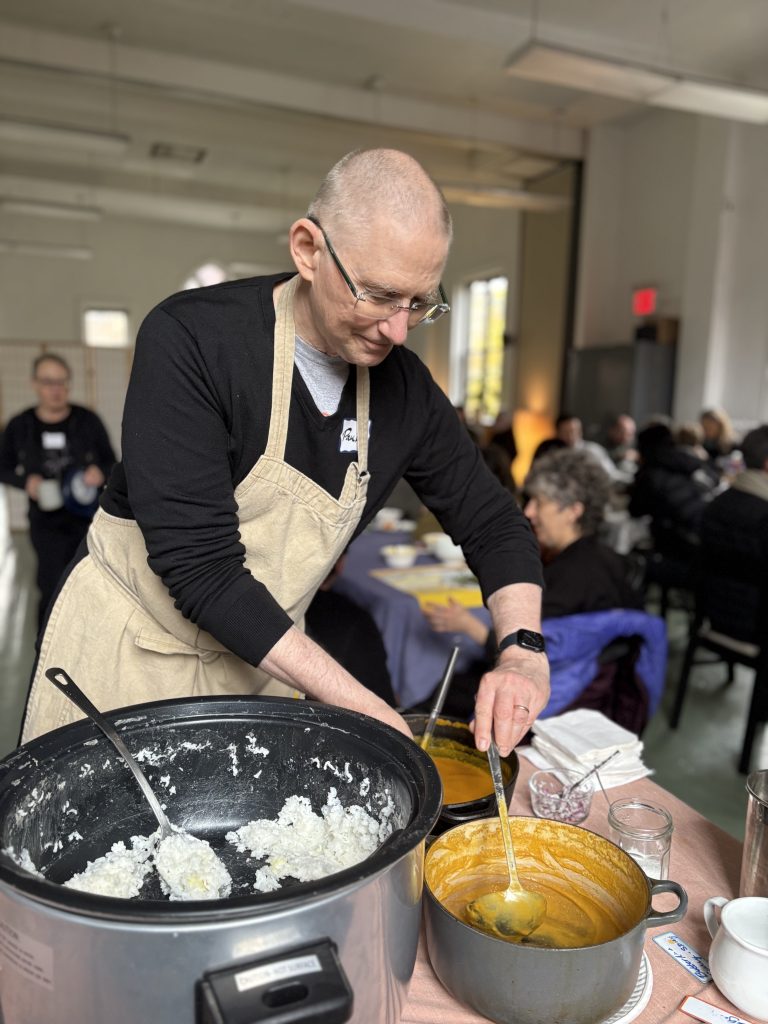
Paul and Isaac prepared lunch: rice and dal, butternut squash soup (the spicy option was popular), and salad.
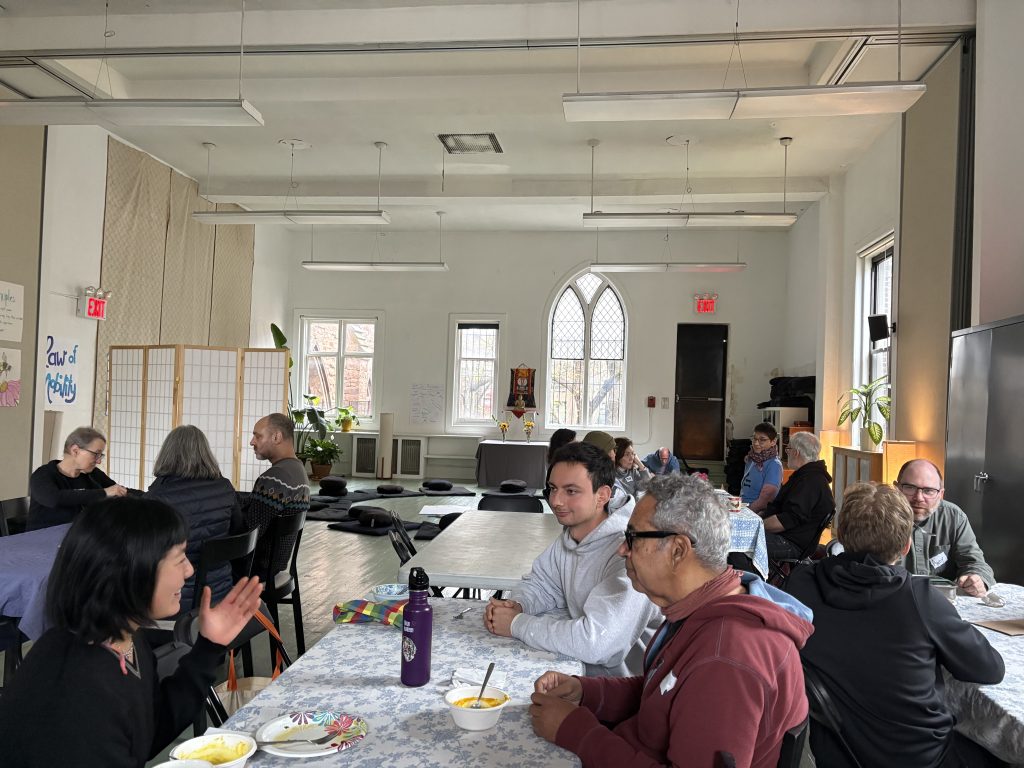
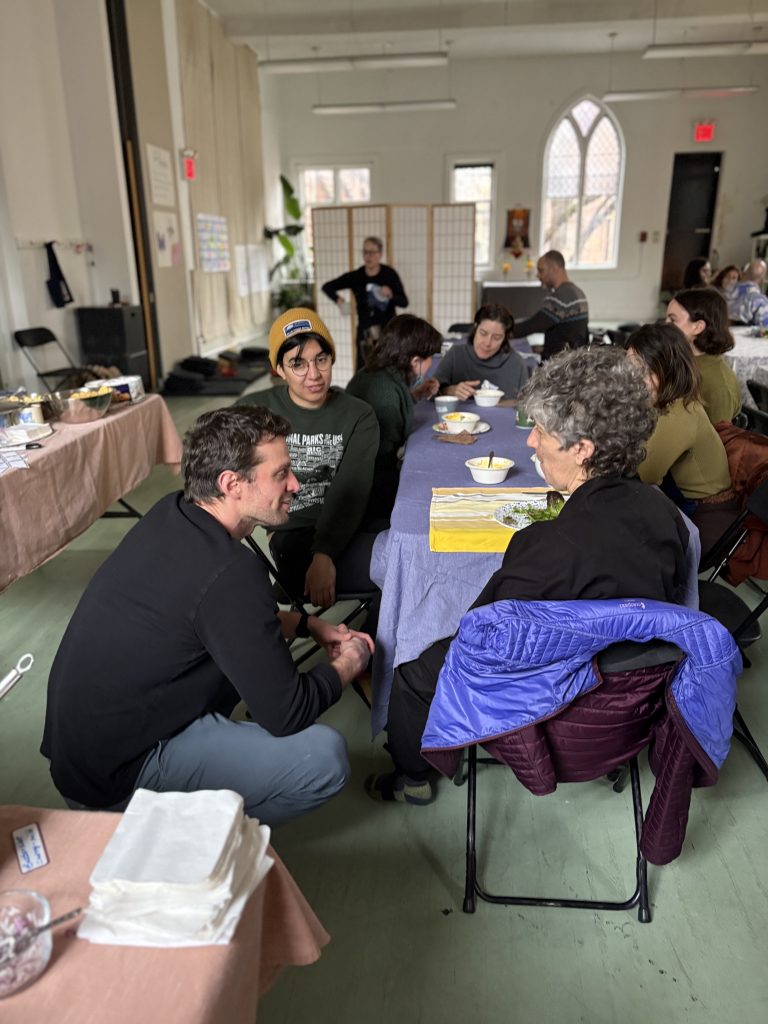
Conversations continue through lunch
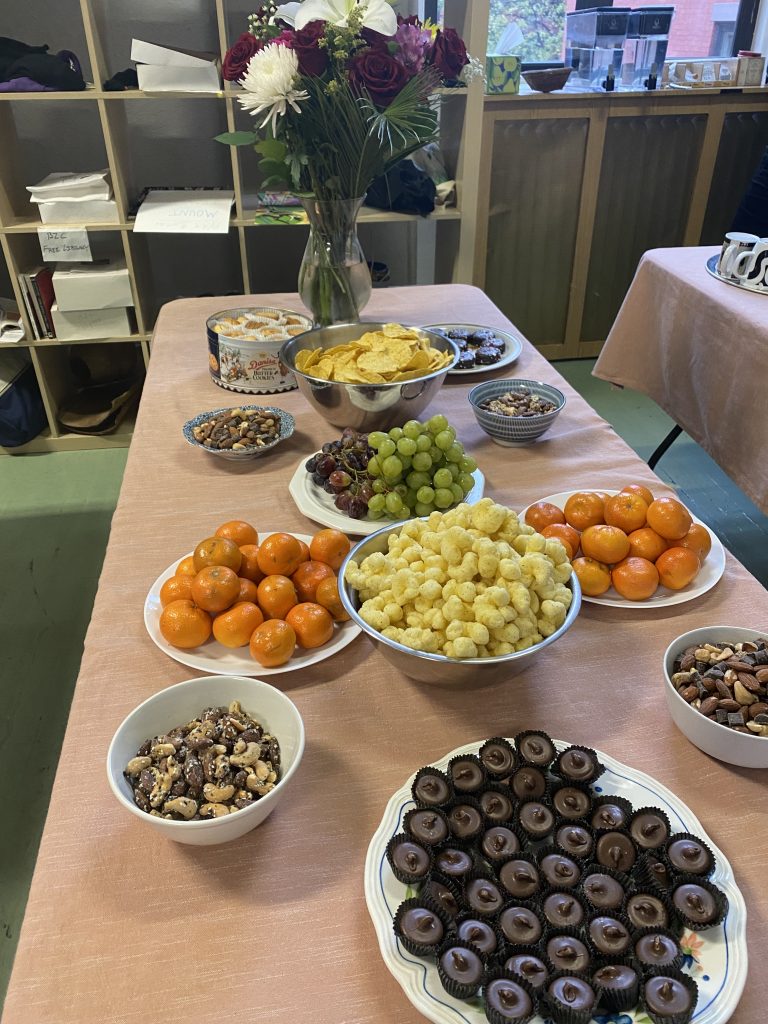
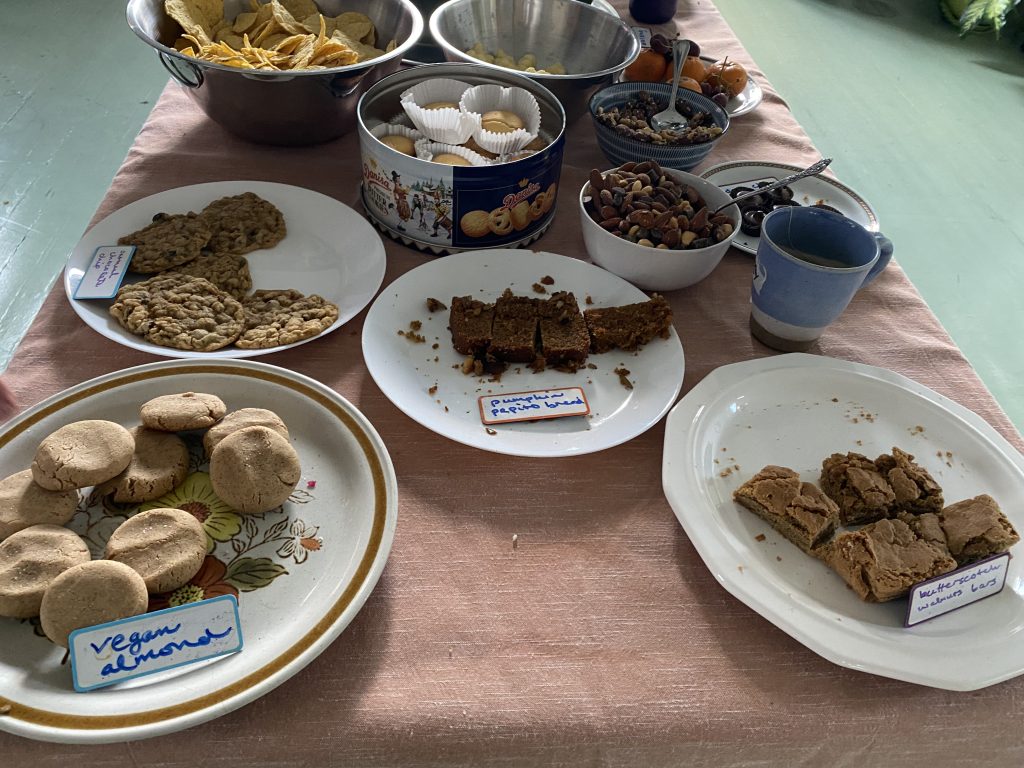
Throughout the day, people contributed homemade baked goods, fruit and nuts, chips and candy, and tea.
Reflections
Heidi shared: “It was a breath of fresh air and pointed to more fun in the future.”
Clare wrote in her journal the morning after: “It takes a certain effort to get to the zendo. Sometimes I feel delighted to make that effort, sometimes I feel trepidatious. Sometimes I feel unenthusiastic, but my feet keep taking me there. It takes my assessing, judging mind about 5 hours to quiet down, so whole day events like sangha day—the ones that take more effort—are needed to find what is beyond judgement inside me. After 5 hours, if I’m lucky, my mind has exhausted all previous known pathways and I start to soften and open. Even though I left early, still when I woke up this morning the impression that remains is one of sweetness. Each person I encounter I can see is filled with a unique quality of sweetness, with its own color and texture. To experience this is why I keep returning to practice.”
This is what the sangha built together on Sangha Day—a day of practice, connection, and imagining what’s possible when we gather.
[Photo credits: Mimi Rosenfeld and Anna Sardar]