In Conversation with Dawn Haney: Holding Space for Queer Dharma Share
November 26, 2025
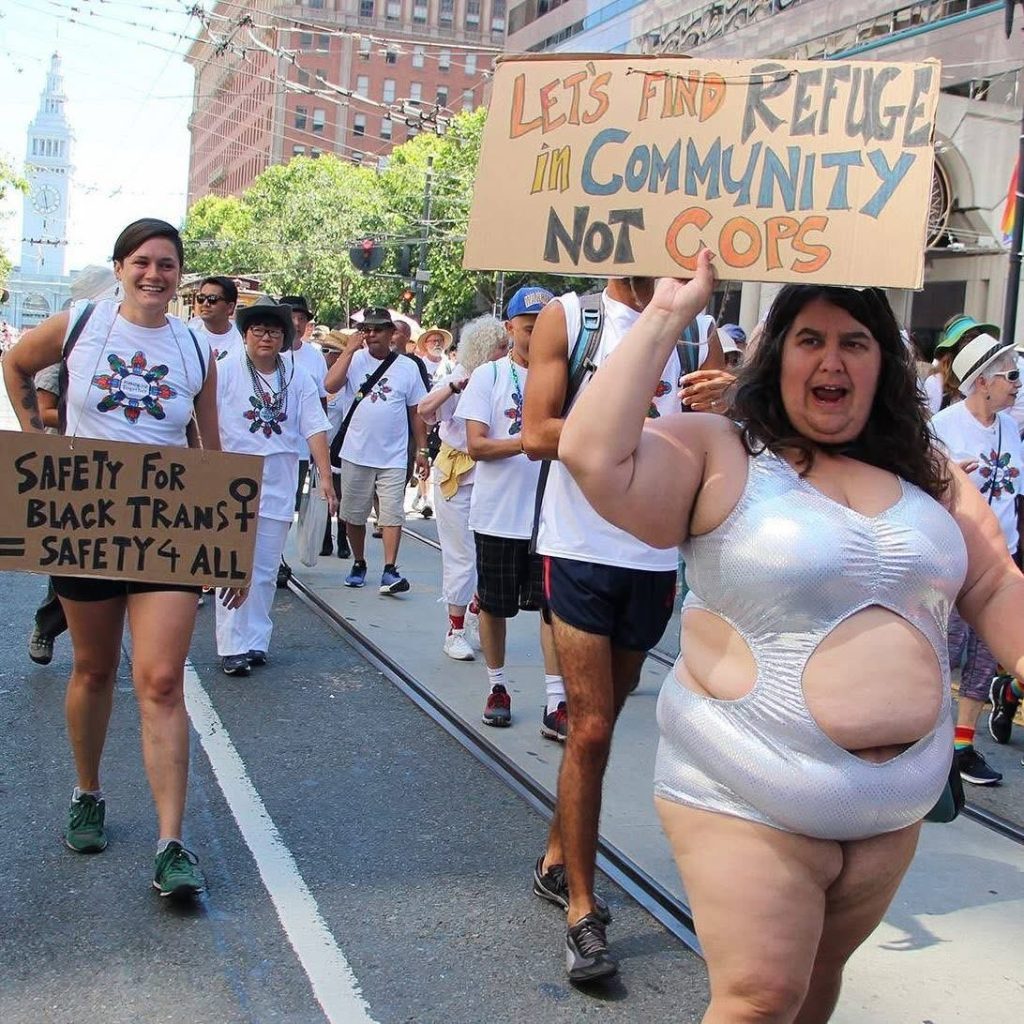
Queer Dharma Share has been held by community members at Brooklyn Zen Center, creating vital space for queer and trans practitioners to gather. The format has recently shifted to include facilitation by dharma teacher Dawn Haney (they/she), and we’re grateful to Dawn for holding this space with the community.
We spoke with Dawn about their practice, their approach to teaching, and what they’re hoping to hold with the group.
Can you tell us a bit about your own path to Buddhist practice? What does your own practice look like these days?
I walked in the doors of the Durango Dharma Center in 2008, burnt out from a nonprofit leadership job that I loved but didn’t know how to do successfully without overextending myself. It wasn’t easy to walk in those doors – I had developed a healthy suspicion of all religion, having given up my childhood connection to Christianity when I encountered church-led gay conversion therapy. (Thankfully I just saw a poster, and did not directly experience this spiritual violence. Though no wonder it took me another decade to come out to myself!)
I feel so lucky that I was welcomed by a deeply kind and caring sangha. At the time, the center was held by Community Dharma Leaders trained in the Theravada lineage of Buddhism. Katherine Barr was teaching from her experience as a lesbian elder; Erin Treat was calling together an affinity group space for practitioners in their 20s and 30s. I connected directly with their teaching, which helped me face what felt like insurmountable challenges in practice, as someone who had learned to survive in a queer, fat, nonbinary femme body by completely avoiding any real connection to my body. The basic practice of awareness of breathing left me doubled over in pain, and this was years before David Treleaven gave us the concept of ‘trauma-sensitive mindfulness’ to navigate these challenges in practice. I’m forever grateful for Erin Treat’s wisdom that if breath wasn’t working, I could tune in to other body sensations like sound as a reliable form of practice.
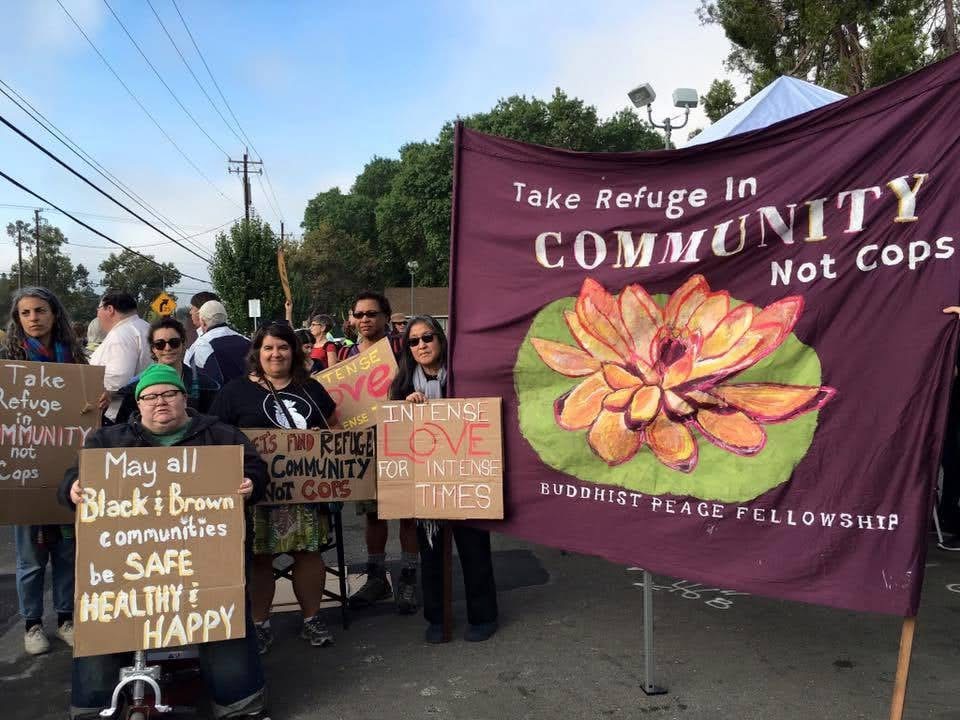
I fell in love with Buddhist practice as I felt how it gently opened me up to awareness of my body – which included awakening to my queerness, developing self-love for my body at any size, and tuning in to my needs for self-care and wise extension that brought me in to practice meditation in the first place. I moved to the San Francisco Bay Area for more than a decade to get advanced-level training in spirituality, sexuality, and social justice – practicing and then teaching at the East Bay Meditation Center (called “the most diverse sangha on the planet”) and leading at the Buddhist Peace Fellowship, a vibrant organization working with the connections between Buddhism and social justice.
These days I live in Portland, Oregon, and feel grateful to have a daily practice of mindful awareness that helps ground me in my body for whatever is coming that day. When life throws me curveballs, I can take a breath, remember I have a body, and tune in to my emotions and thoughts as part of my experience but not the whole of it. From that embodied awareness, I have more choice about how to move from kindness, self-compassion, and joy.
What drew you to facilitating the Queer Dharma Share at Brooklyn Zen Center (BZC) specifically?
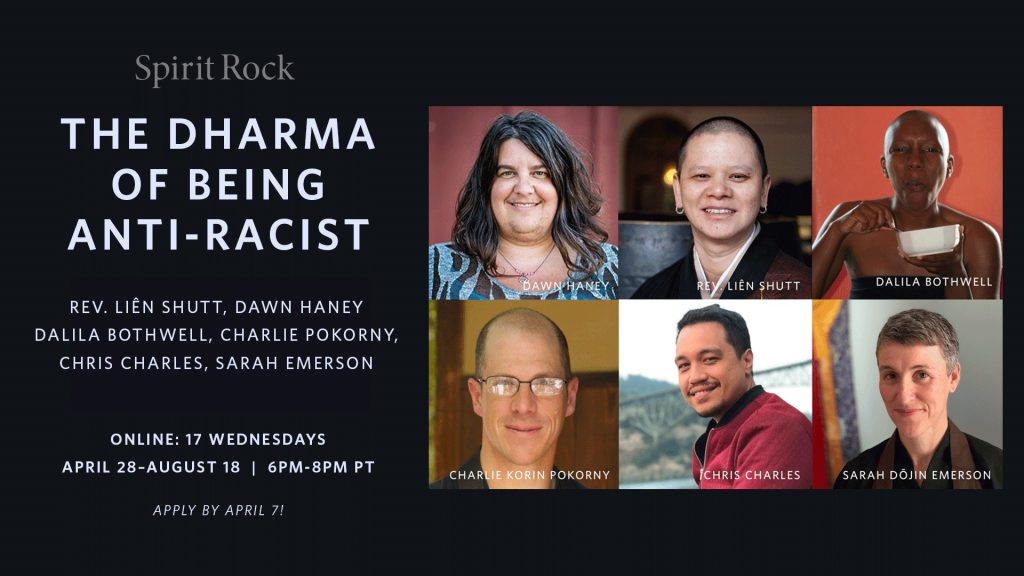
I got to know Revs. Sarah & Charlie when co-teaching The Dharma of Being Anti-Racist, Rev. Liên Shutt’s brilliant class that studies anti-racist practices through the lens of the Eightfold Path. (Rev. Liên’s book Home Is Here will walk you through the core dharma wisdom from the course). Sarah, Charlie, and I shared the work of holding affinity groups for white anti-racist students, alongside BIPOC affinity groups. That class invited in white students with some training in racial awareness to develop a more active anti-racism through practices with view, motivation, effort, speech, and action. So when Sarah called me wanting support, I knew she brought wisdom and appreciation for the value of affinity group practice. I was glad to bring some of my teaching at EBMC’s Alphabet Sangha and with emerging queer communities in other sanghas.
Your teaching brings together Buddhism, feminism, community organizing, and trauma healing. How do these wisdom traditions show up when you’re holding space for queer and trans practitioners?
Like with any dharma community, people are bringing the realities of their lives to sangha – whatever suffering they are experiencing in the body, heart, mind that might be differently met with the Buddha’s practices for awareness and compassion. I find that the traditions of feminism, community organizing, and trauma healing offer translation into today’s languages about interdependence and the Four Noble Truths: suffering exists and you are not alone in it; there are causes to suffering from your childhood, ancestry, and surrounding political conditions; you have personal and collective agency to end suffering; and you can make change happen by tending to your wisdom, ethical conduct, and mental discipline.
What are you noticing about what queer and trans sangha members are holding or navigating right now?
While I would confidentially hold any specific stories shared by queer and trans sangha members in the affinity group, the BZC Sangha can bring awareness that the political news of attack is not ‘out there’ but impacts the daily life of fellow sangha members. There is intense political attack to erase and dehumanize trans people whether they are denied access to needed health care, unable to use public accommodations to go to the bathroom, or stopped from receiving gender-inclusive care at school. When queer marriage was legally threatened this year, same-sex couples felt the direct threat to rupture their family structure, home life, and daily activities. With this culture-wide attack, there are fewer spaces for queer and trans people to name, process, and move forward from that harm. This makes the Queer Dharma Share an especially precious space for people to feel seen and heard in this moment in their full range of emotions, thoughts, and sensations. BZC also has the opportunity as a whole community to offer a safer space for queer and trans sangha members to meet their reality with kindness.
Are there particular themes or questions you’re excited to explore with participants in upcoming sessions?
I hope to explore themes from my class on Finding Liberation in Relationship (happening with Regent Brown at EBMC Monday nights in December). So much of our lives are met in relationships – at work, with our families, at the grocery store, with friends, in romantic partnership, and with ourselves. Bringing a Buddhist take to understand the relational practices of boundaries, feedback, conflict, and accountability has been a meaningful way to build toward more interdependent love-oriented connections. A favorite morsel of wisdom from this class is Prentis Hemphill’s quote, “Boundaries are the distance at which I can love you and me simultaneously.” This wisdom continues to influence the different ways I express my limits – whether taking risks as I dive toward deepening a relationship with a new friend or taking space with limited contact for healing in relationship with my dad.
Who are the teachers or teachings that have shaped you most?
A few years before I walked into a dharma center, someone had passed me their copy of Pema Chodron’s “When Things Fall Apart.” It was my daily reader during some challenging points in my life when I had lost track of myself while living with someone in addiction. My early meditation retreats and year-long programs were with engaged Buddhist teachers like Joanna Macy, Mushim Ikeda and Roshi Joan Halifax, who continued to help me translate Buddhist wisdom into practical guidance for my messy daily life. The East Bay Meditation Center has been my core sangha since 2011, and I learn so much from how the entire community practices Radical Inclusivity, from the Agreements for Multicultural Interaction, the all-dana financial model, accessibility policies, and affinity space for practice similar to the Queer Dharma Share practice group. Larry Yang has been a foundational teacher for my learning of the dharma, including my 2-year study at Spirit Rock Meditation Center to become a Community Dharma Leader.
What brings you joy in teaching?
I find great joy in opening up space in my teaching for questions, commentary, and conversation with participants so I can get a real sense of what they are learning and how it impacts their lives. During conversation, I find great joy in witnessing their new insight coming into focus, moving from my general wisdom to a shift in view of how they make sense of their personal reality. For so many queer, trans, and marginalized dharma students, Buddhist wisdom offers a powerful shift in view from “I am wrong” (as messaged to us from nearly every direction of the dominant culture) to “I am love” (that we learn to hold consistently with Buddhist practices of self-awareness and compassion). When I see participants open toward loving themselves and the world, I see change in action from less suffering toward more care.
Join Queer Dharma Share
Queer Dharma Share meets online on the first Monday of each month from 7:00–8:30 PM ET. Upcoming sessions: December 1st, January 5th, February 2. This space is open to people who identify across the LGBTQIA+ spectrum. More info here.
Contact info@brooklynzen.org for the link to participate.
This event is offered freely. Dana (generosity practice) is welcome for Dawn Haney and Brooklyn Zen Center.