Envisioning Our Futures: Sangha Voices
December 23, 2025
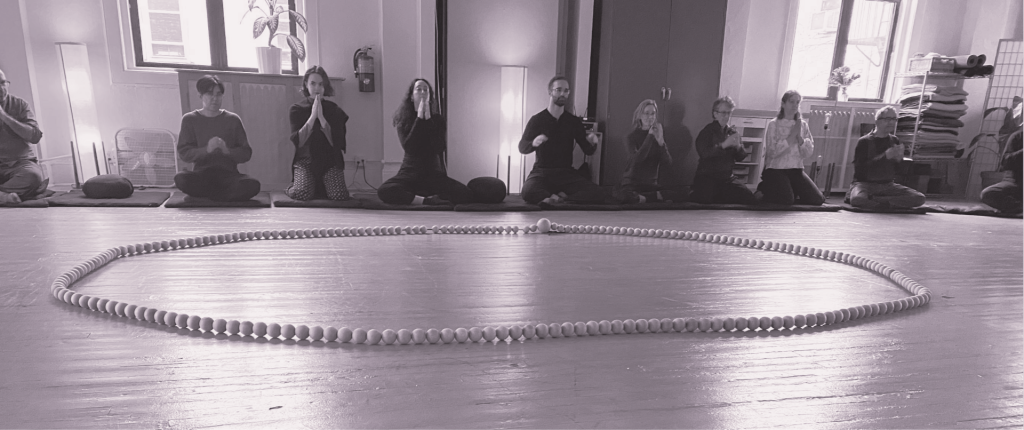
For this year’s annual fundraiser, we’re listening deeply—to one another and to the visions we hold together for Brooklyn Zen Center. What does this community mean to you? How do you envision our collective future?
Below, we’re gathering voices from sangha members as they reflect on what BZC has been, what it is now, and what it might become. We’ll be adding new testimonials weekly throughout the campaign.
Last updated: January 23, 2026
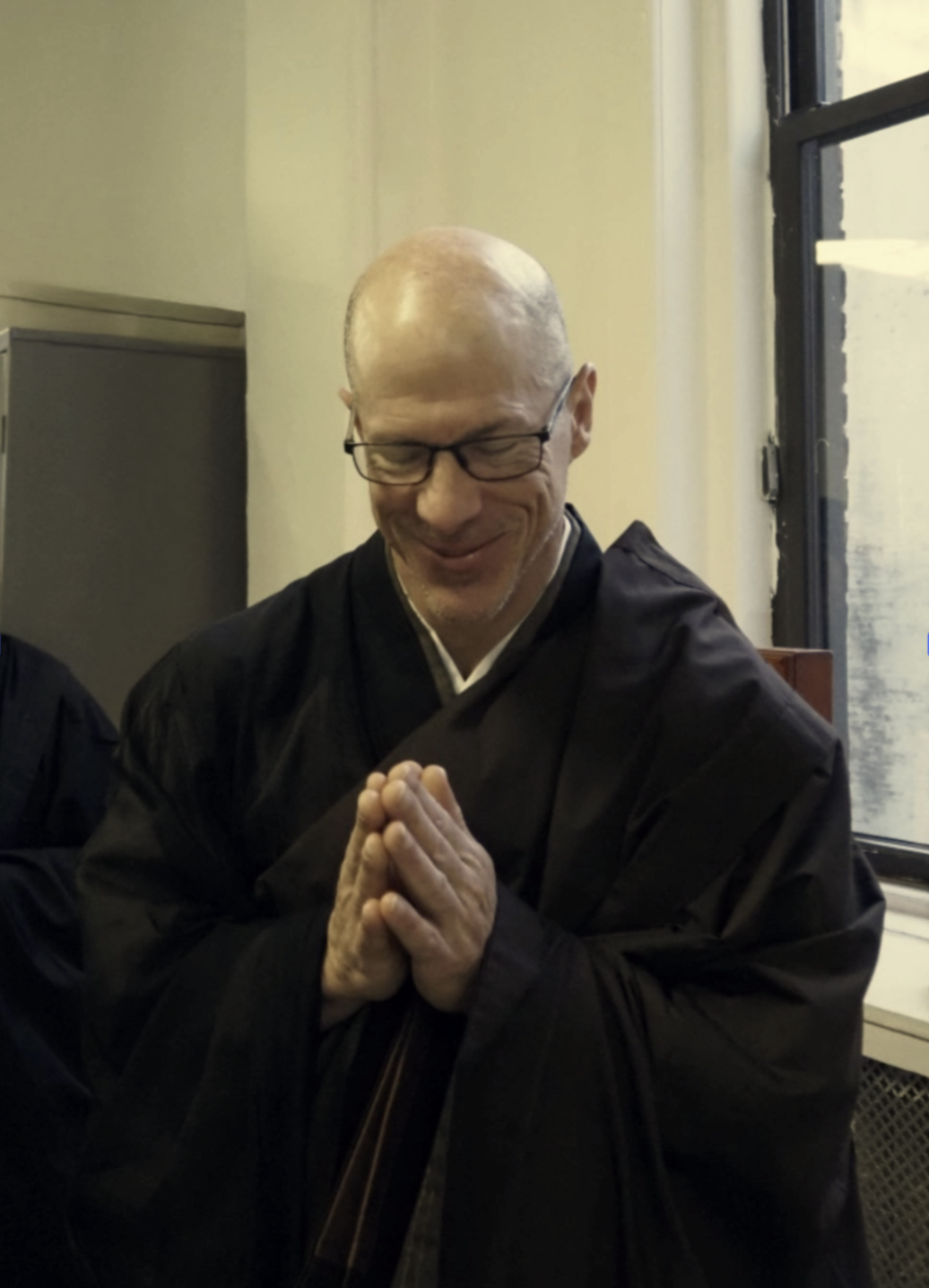
Thank you from Charlie
I have deeply appreciated the sincerity, warmth, insight and beauty expressed in the testimonials by Emily, Cat, Mark, Austin, and Matthew. In these visions, in the Way-Seeking Mind talks happening on Wednesday evenings, in the sustained collective effort to reach our fundraising goal, and all the occasions in which we come together for zazen, ritual and sharing, I feel the Sangha Sangha-ing. These many lights shine like the jewels in Indra’s net, each illuminating and reflecting all the other jewels, boundlessly.
What we each offer, all together, nourishes the luminous, intimate life of the Sangha body. This is inseparable from the Buddha-Dharma-Sangha body. Thus we care for and venerate and sing endless verses of praise for the three treasures in the ten directions.
The fundraiser ends in just two days! We only have $2,300 dollars remaining before we reach our $50,000 goal.
If you have already given, deep bows of gratitude!
If you have been waiting for the last minute, it’s arriving!
May this be for the benefit of all beings, supporting our myriad Bodhisattva efforts in this world of intense suffering and harm.
Bowing with deep appreciation and respect,

Luminous Forest, Gentle Hero (Charlie)

Matthew Menzies
Within our Sangha, I see hope for the future in the upright practice, shared by the community. I see the possibilities and opportunities that present in each moment, as new persons visit and join, and take their sitting postures alongside long time students and community members. The offering, that practice is timeless, with unknown unknowns awaiting around every corner, for us to discover together! This is hope for me.
For future events! I’m looking forward to more parties! More relaxed get together. The practice of Zen can be so formal, and our community could use some lightness and ease in these difficult times. I’m also looking forward to more color, more art, more vibrance! Perhaps there’s an event in the future that will bring out and share the creative side of our community!
Zen in my life, is a throughline. It’s like the traffic lines on the road, extending out into the distance. When I’m tired, or stressed, or worried about how I’m going to make the world a better place, the lines help me predict the twists and turns on the road ahead. I hope that it can become a bit softer, perhaps more intimate and long term. In the past I’ve practiced very rigorously, and then other times not at all. I’d like to find a rhythm, a cadence that can extend longer term.
To do so, I feel I must return to self study, and reading, as well as daily Zazen. I believe reading and sitting, two main aspects of our community center is essential to keeping the health of the practice. The community library, and support systems for daily Zazen, are such useful and healthy elements to maintaining the ‘Way of Awakening’. Let’s sit, and read, and play, and laugh more in 2026!
Sincerely,
— Matthew
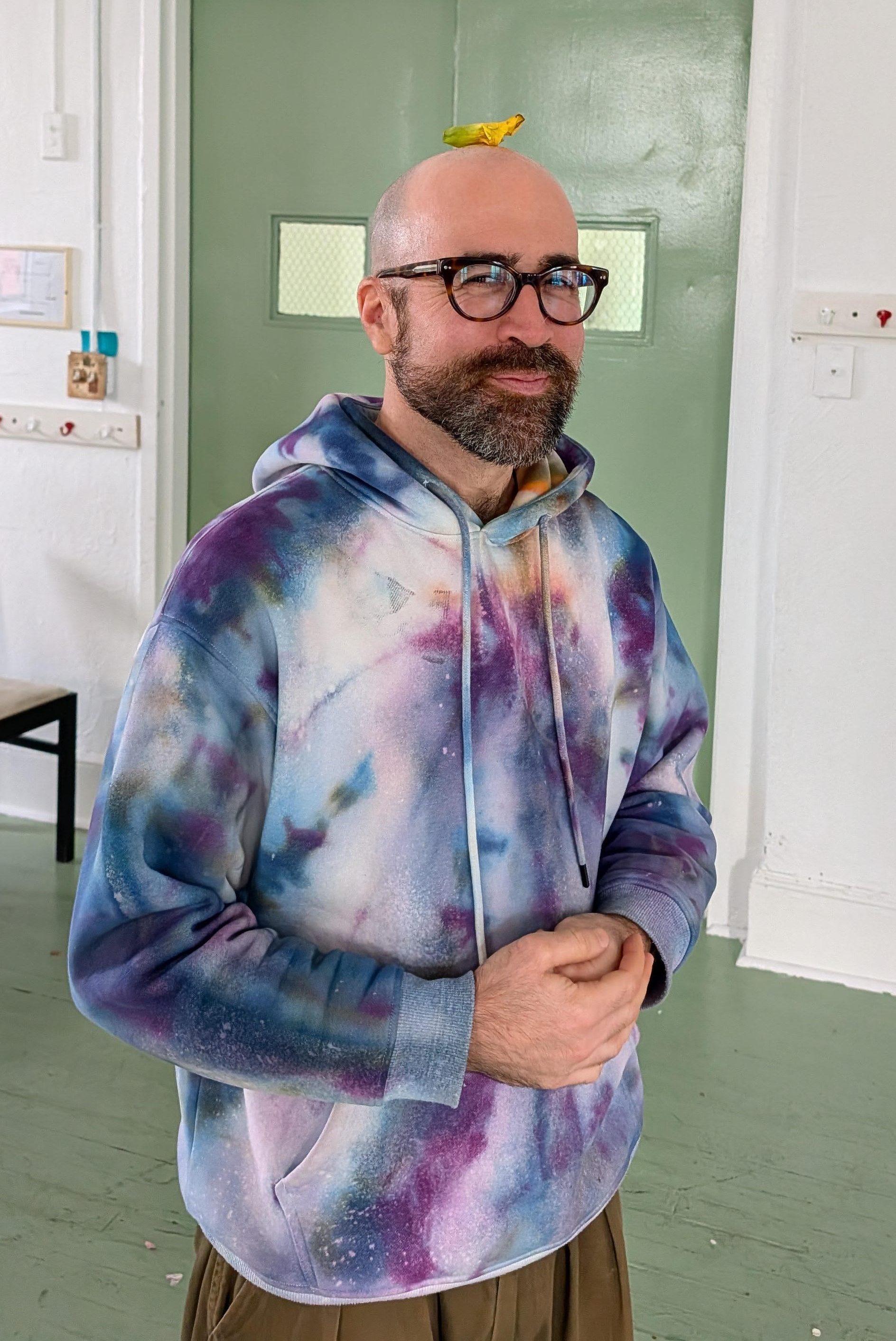
Austin Guest
When I first came to BZC for the Beginner’s Mind class last January, I didn’t know what to expect. I was still reeling from the sudden loss of my father a few months earlier. I wasn’t sure how to find the ground under my feet or what path to walk once I found it. But I knew more clearly than I had ever known that impermanence and suffering were an inevitable fact of life. I knew that I needed to find ways to live with and learn from my grief. I wasn’t quite sure how Zen practice would help me do this, but I had a strong heart-intuition that it would.
From the first time I set foot in Boundless Mind Temple, I felt wrapped in a sense of care that helped me inquire into my grief in a way that felt safe. It didn’t make the hurting go away. It helped me incorporate the hurt into a tender embrace in which impermanence could exist alongside buddha nature, in which suffering could give birth to wisdom and compassion. These certainties became clear because they were reflected back to me in the tenderness with which each of the sangha members held each other’s practice.
I remember the sense of ease I felt when Charlie gently emphasized in his meditation instructions that there was no right way of doing meditation to strive toward. I felt similar relief when Sarah reassured us that when chanting it was okay to take a breath and miss some words because the voices of the sangha were like the current of a river that would continue flowing and hold as you replenished your breath, then be there to to swim in again when you returned. Amidst all of the loss I was experiencing, here was a place I could find refuge because I didn’t have to strive to fix my woundedness. I could just be me in all my full and broken beauty. I could trust I would be held by other humans while I replenished my breath and learned to swim in the current again.
I remember the first time I attended a Dharma share and I opened up, quivering, to tell a group of strangers that I was still shattered by the experience of losing my dad in a hiking accident in the midst of trying to reconcile a conflict with him. I remember being overwhelmed by the sheer impossibility of trying to put everything I was feeling into words. I remember how I melted in relief when the smiles and warm embrace of the group helped me realize I didn’t have to capture my feelings in words. I could just feel them and be held.
I remember what it felt like to leave my first sesshin in April to respond to the news that my mom had contracted pneumonia and what it felt like to attend my second sesshin in October heavy with the news that she had passed. Each new loss broke my heart open. But in that openness, love flowed in. When I told Kristen I needed to leave sesshin, she met my gaze and I felt a wave of compassion flow through her clear eyes into my teary eyes. Months later, the sangha held a remembrance ceremony in which we rang a prayer bell 108 times to honor those we’d lost. As I completed my turn ringing, I turned around to hand the striker to the next person in line, and I met Kristen’s eyes again. Tears and compassion flowed once more, only this time, I had a deep reservoir of care to pass back to her.
As the losses of last year piled up, so did a sense of resilience fueled by connection. Increasingly, I felt a calm confidence that I didn’t need to overcome my loss or push past it. Increasingly I knew – not in my head but down deep in my heart – that I could find the energy and patience to befriend my loss. I could find this energy because I wasn’t just drawing on my own reserves. I was drawing on the energy of all of the other sangha members and all the other sentient beings to whose hearts my practice showed me my own heart was so deeply and intimately connected.
Over this year, I found my footing. Over this year, I found my home. Over this year, I found my seat.
As the year closed with the sangha gathered to celebrate Rohatsu, I had a chance to reflect on everything the year had gifted me. On the final day of the sesshin, after sitting zazen in the rising sun, walking kinhin in the falling snow, and showering each other with rose petals, we gathered to pose a question to our teachers. I asked Sarah about the tears I’d shed over the course of my sit. Tears that opened up forgiveness for the world and myself. Tears that had washed away anguish and nourished wonder. I wanted to know where these tears came from when they arose and where they went when they passed away. I wanted to know what these miraculous tears were made of.
Sarah told me a story about Alokiteshvara crying into a vase, mixing the tears, and using them as medicine to heal a suffering world. It struck a chord. Over the last year, the sangha has been a vase that has held my tears and transformed them into medicine. I have learned to love my tears and shed them freely. I have learned I can trust these tears to heal my wounds and the wounds of the world around me. As the sangha continues to traverse challenging times filled with loss, sorrow, and uncertainty, my hope is that our practice together can continue to be a vase that holds our tears, invites them to flow, and allows them to become medicine.
I believe – because our practice together has given me faith – that we all have this medicine in our hearts, especially in our darkest moments. I believe that the medicine of our tears knows just where to find us when we need it most: exactly where we are. Where are we? Here. Together. Co-creating the vase of our sangha. Out of gratitude, I want to care for this vase with my full being – with all of the resources I have at my disposal. I invite you to care for it with me.
Let’s mix medicine together.

Mark Graham
I came to Brooklyn Zen Center as the many crises of climate, justice and democracy called for me to act, I needed a sangha and practice that could help me meet this moment. I discovered that Brooklyn Zen Center was a place where justice was not an add-on to the dharma, but integral to it. I joined the Undoing Patriarchy sub-sangha in 2019, and during the isolation of Covid I experienced it as a community of deep care and transformation. At a time when I had lost an in-person sangha after a painful crisis, BZC offered something I didn’t take for granted: a community willing to stay present with difficulty, both in the world and in itself, rather than bypassing it.
When I was finally able to begin to join the regular Saturday services, what became evident to me was the lived experience of BZC’s sangha. Every Saturday, we arrive early to Christ Church and collectively build a Zendo, transforming a borrowed gymnasium into sacred space. We lay out cushions, set up the altar and prepare the space so it can also be shared with those joining remotely. Then after zazen, guided by extraordinary priests who help bring the dharma into the difficult world we’re facing, we find the spiritual support we need – whether it’s emotional grounding or the insight to take appropriate action or both. And when the service ends, we take it all down together, clean the space, including the bathrooms, and have tea and homemade treats together. No one person owns the ceremony and no one is above the work. This is sangha as embodied practice: showing up, taking responsibility and mutual care.
Participating in the 21-day intensive and sitting sesshins taught me another key quality – no one is left behind. This was expressed in simple ways such as waiting, mindfully, to begin each step of the day until everyone was ready. Our practice is not something delivered to us but something we do together with attention to the pace and presence of all involved.
Support this embodied practice
My activism outside BZC highlighted another important element, I was also able to see that this way of practice could ripple outside of our community. In a world dominated by corporate and governmental authoritarianism, the aspiration to be sangha-led is a radical act in itself. It is also a refuge: a place where members engaged in many forms of necessary work can return, commune, be transformed, and remember how to live and act without reproducing the systems we are resisting and trying to change.
Brooklyn Zen Center is faced with the challenge and privilege to continue rebuilding itself in this way. It will require showing up with courage, effort, patience, and financial support. I know our doors are open—to regular members, long-time returning members, and new practitioners joining in-person or online. Presence, special skills, and labor are critical forms of support, but in this unforgiving US economy, money is essential to this attempt, and giving—at any level—is a key way of participating in what we are trying to build together.
I hope you’ll join us, in whatever way you can, in supporting this living practice. What we are cultivating here reaches beyond Brooklyn Zen, offering a felt experience of how another world is possible in a moment that urgently calls for it.

Cat Von Holt
When I envision the future of BZC, I envision another Rohatsu. The weekend before last, I sat my first Rohatsu sesshin. Several times during the sesshin, people mentioned how much smaller it was than usual. For me, though, because I had nothing to compare it to, it didn’t exactly feel small; it felt sweet and cozy. And oh so celebratory! The flower petals flying through the air on the last day of the sesshin gave me this feeling that, even in the midst of the change and pain and grief that our sangha has gone through this year, in a way, we are flourishing at the same time, too, with this burst of joy and togetherness around the Buddha’s awakening.
And it’s not just Rohatsu. I envision so many things: I envision my Way-Seeking Mind Talk in just a few weeks—the bizarre experience of sitting on the cushion in front of the altar for the first time, facing outward, and speaking about myself. I envision taking the precepts at the end of March, and probably sobbing my way through the end of the Jukai ceremony as I receive my rakusu and a dharma name from Sarah Sensei. I envision wearing the samue that Wesley made for me with love and care, and I envision finally being able to wear the rakusu on top of it, sewn with bright red thread, that I have been tenderly piecing together for the better part of this year. I envision begging Charlie Sensei to offer a class on koans sometime soon. I envision witnessing the tenderly held work of the Governance and Ethics committees, as they develop new ideas for new governance and ethics structures in our sangha—structures that are responsive to the crises in governance and ethics that our sangha has faced, and structures that might provide the foundation for a sangha that is vastly healthier than before. I envision reading Dōgen for the first time, diving into Moon in a Dewdrop, and discussing it with Sarah and Charlie Senseis in dokusan. I envision returning, again and again, to the zendo—with its chilliness in the winter and its stickiness in the summer, with its turquoise painted floor, and with all the zafus and zabutons stacked in the corner.
Even after this difficult year, I look to BZC’s future with a feeling that the most beautiful parts of this community will keep being there, in that zendo, whenever I decide to come find them.
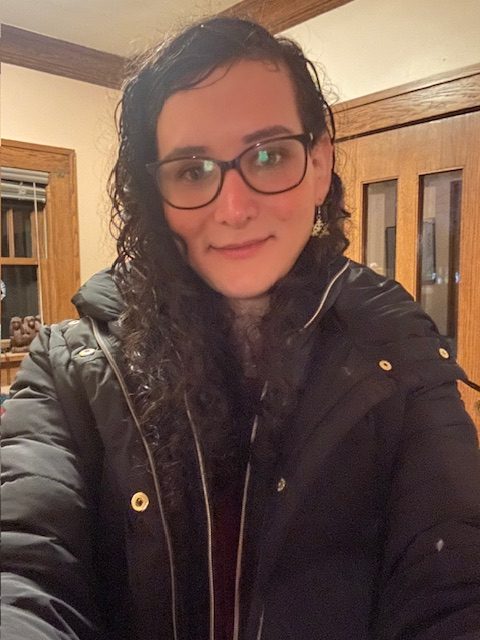
Emily Fjelstad
I first came to BZC after I realized I needed to surround myself with people committed to living a spiritually-integrated life if I had any chance of successfully doing so myself. It was a one day sesshin in January, and before the sunset I felt like I had found a place that could be a home. It wasn’t the dharma talk or my dokusan with Charlie Sensei–it was the way Kristen taught me how to walk through the door. It was the way Elizabeth & I sat quietly next to each other sipping tea. It was the way Kyle apologized for speaking before giving us treats.
But I can’t think about the future without ruminating on what I think is essential to preserve. This was, and is, the only place in my life where sincerity is the standard. It’s the only community where when someone upsets me or when we’re having a disagreement I implicitly trust that they are upsetting and disagreeing with me with the sincere motivation of making our collective lives better–and I feel that same trust that they have in me. Qualities that in the rest of my life are scarce and unusual are somehow so common in this community that I take them for granted.
But I can’t think about the future without ruminating on what I think is essential to preserve. This was, and is, the only place in my life where sincerity is the standard. It’s the only community where when someone upsets me or when we’re having a disagreement I implicitly trust that they are upsetting and disagreeing with me with the sincere motivation of making our collective lives better–and I feel that same trust that they have in me. Qualities that in the rest of my life are scarce and unusual are somehow so common in this community that I take them for granted.
Now I find myself on the new development committee, having conversations with sangha members I hardly know where I see their eyes light up while they’re describing community events and changes we could have in the upcoming year. And what is heavy for me is understanding just how fragile our community is. Changing risks destabilizing the interpersonal habits we have built with each other and alienating the sangha members that made this community into the one I joined two years ago. Not changing risks collectively clinging to an unchanging fantasy of what our community looks like that will slowly turn our habits and forms into thoughtless repetitions of heartfelt sincerity, and failing to be welcoming to new people who could find our sangha today. So I think we should do both: Change and Not Change. Which is, maybe, yet another impossible task. And yet, I think, it’s worth it.
Share Your Voice
Want to share your vision for the future of BZC? Emily of BZC’s new Development Committee is collecting short written (or video) testimonials from any and all sangha members interested in having their voice included in a booklet compiling the different unique visions our community has for itself at this moment (with the possibility of it being bound & kept in the zendo and/or put online), and potentially to be used in this fundraising campaign. Expressions of gratitude, grief, frustration, joy, sadness, or any other emotions that are arising are welcome and valued.