“One Cannot Take Refuge While Remaining Indifferent to Injustice”: An Interview with Dr. Santosh Raut (Maitriveer Nagarjuna)
August 12, 2026
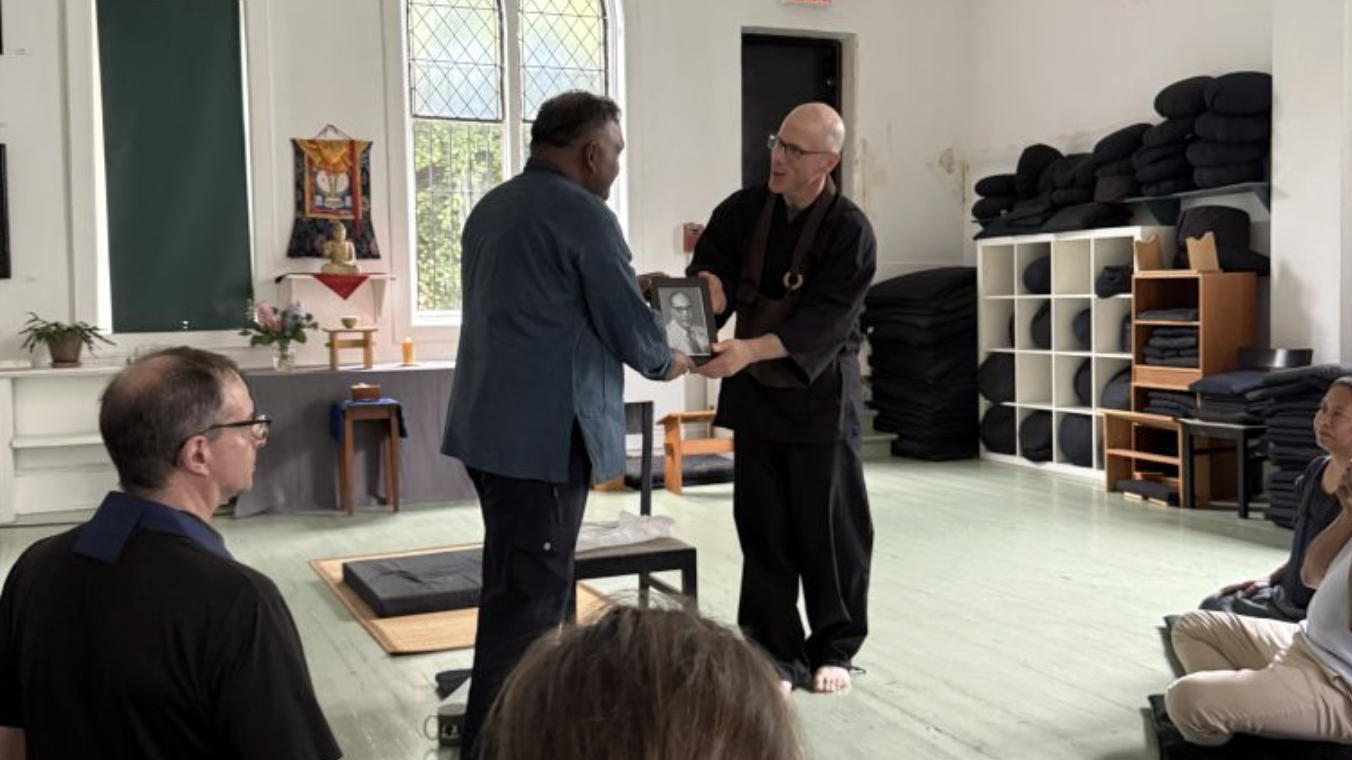
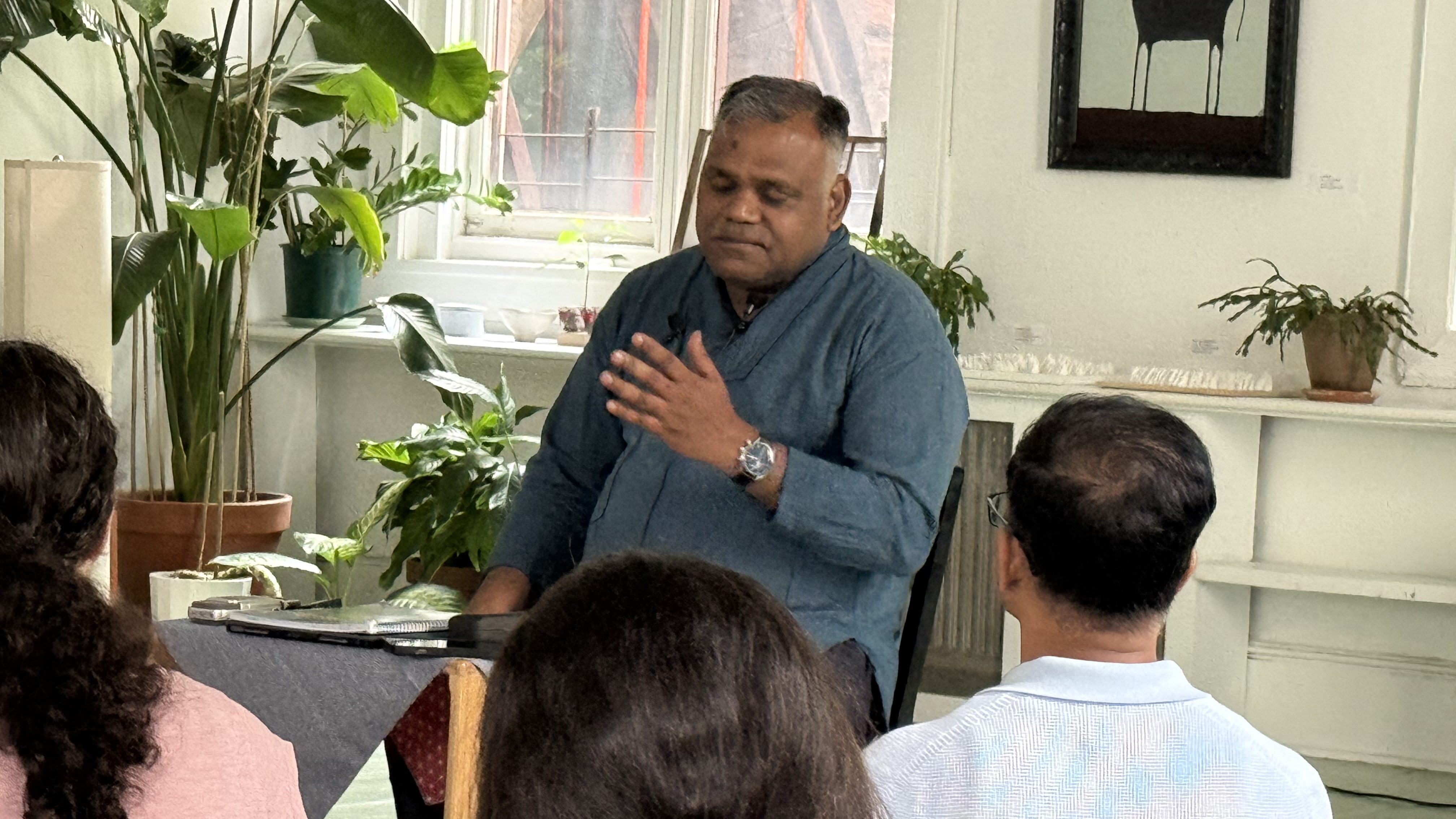
Charlie Sensei interviewed Dr. Santosh Raut — known as Maitriveer Nagarjuna in retreat contexts — during his time as a Research Fellow at Harvard University.
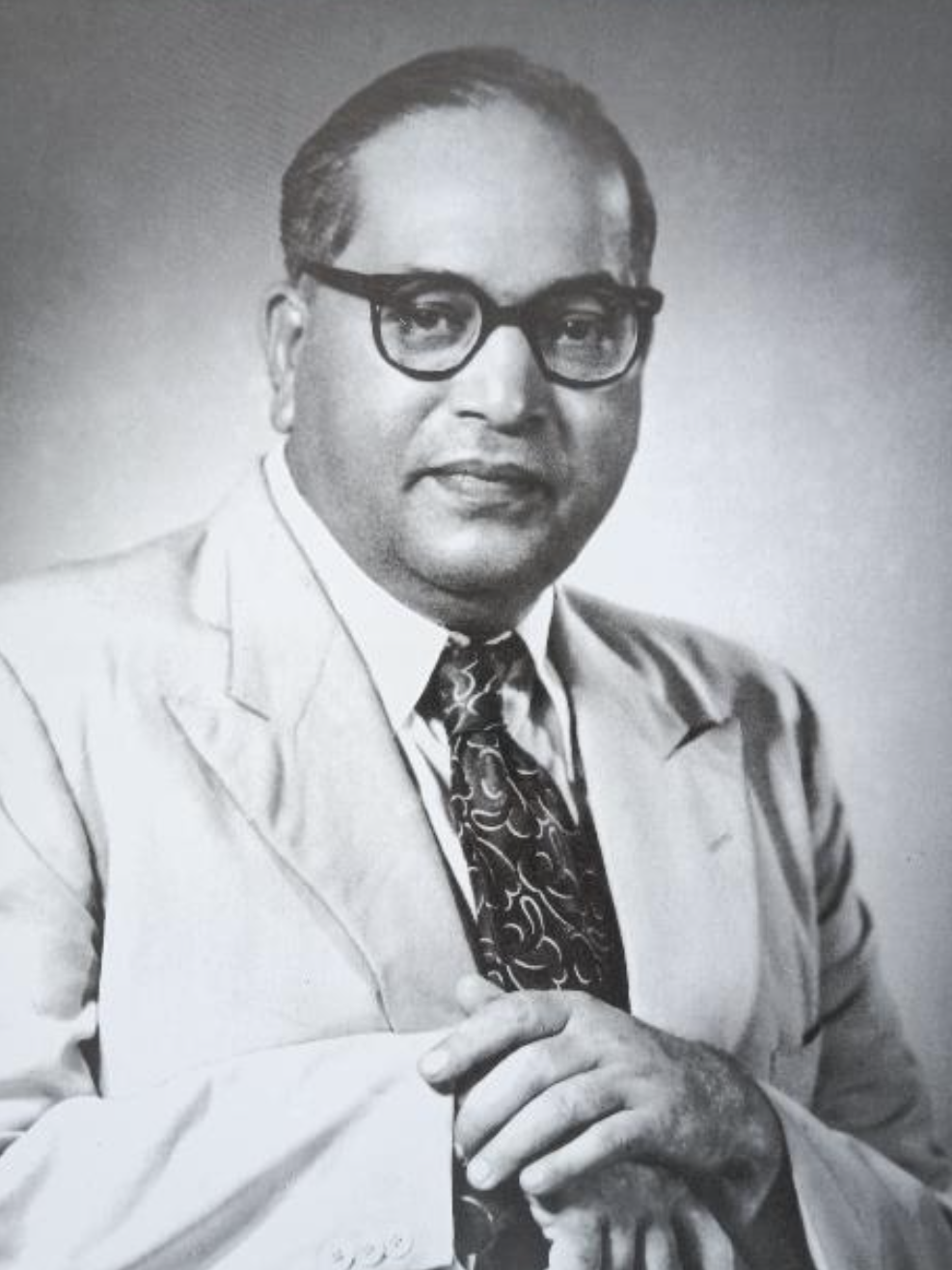
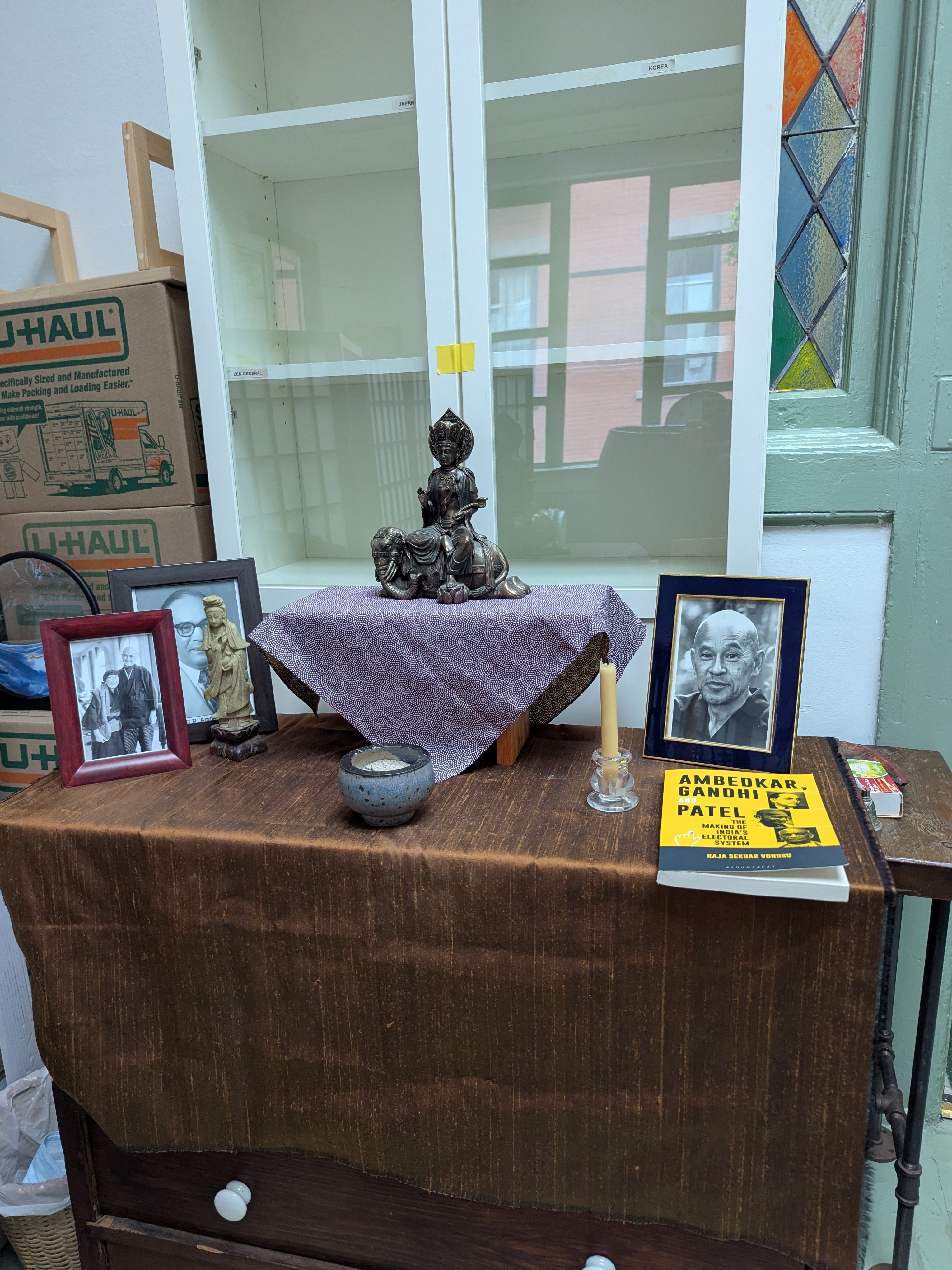
In their conversation, Dr. Raut reflects on his recent visit to Boundless Mind Temple, where he generously shared a photograph of Dr. B.R. Ambedkar and the book, Ambedkar, Gandhi and Patel: The Making of India’s Electoral System (by Raja Sekhar Vundru) with our sangha. He also discusses his deep friendship with the late Alan Senauke, a Soto Zen lineage holder, and explores broader themes connecting Ambedkar’s legacy to socially engaged Buddhism.
Join Santosh’s online class this fall, here.
1. During your visit to Boundless Mind Temple in Brooklyn, you brought gifts for our sangha: a photograph of Dr. B. R. Ambedkar and a book about him. Could you describe the significance of these gifts and why you chose them?
I wanted to bring something that represented not only Indian Buddhism but also the living spirit of the Buddha’s teachings in the modern world.
The photograph of Dr. B. R. Ambedkar represents much more than a historical figure. For millions of Buddhists in India and around the world, he symbolizes the possibility of transforming suffering into dignity through the Dhamma. He understood the Buddha not simply as a religious teacher but as a guide for building a society based on wisdom, compassion, equality, and justice.
In my view, Ambedkar’s greatest contribution was that he restored Buddhism to India after many centuries, but he did much more than revive an ancient religion. He reinterpreted the Buddha’s teachings as a practical path for social transformation through nonviolence. He demonstrated that liberation is not only personal; it must also be social. A society built upon inequality cannot fully support spiritual awakening.
The book I offered to Boundless Mind Temple is written by Dr. Raja Sekhar Vundru. It explores one of the most decisive moments in modern Indian history—the struggle over political representation for the so-called “Untouchables.”
Ambedkar fought to establish genuine democracy in India by ensuring political rights for oppressed communities. The book also examines the ideological conflict between Ambedkar and M K Gandhi regarding caste and social reform. Gandhi sought reform while largely remaining within the framework of varna and traditional Hindu social thought (responsible for the oppressive caste system). Ambedkar believed that genuine equality could never emerge from a system whose very foundations rested upon graded inequality.
For Ambedkar, the Buddha offered a completely different vision. The Buddha rejected birth-based hierarchy and taught that every human being possesses the capacity for awakening. Human worth is determined by ethical conduct, not by birth or social status.
The events surrounding the Poona Pact were politically intense and emotionally charged. Yet Ambedkar responded with extraordinary restraint and moral clarity. His commitment to nonviolence and dialogue reflected deeply Buddhist values, even before his formal conversion. In many ways, this episode illustrates how Buddhist ethics can guide political action without hatred or revenge.
That is why I wanted to bring these gifts. They invite us to reflect on how Buddhism continues to speak to the urgent questions of justice, democracy, and human dignity today.
2. How was the Buddha a social reformer?
I think we often misunderstand the Buddha if we imagine him only as someone concerned with individual enlightenment. The Buddha transformed society precisely because he transformed the way people understood themselves and one another.
One of his most radical contributions was his rejection of caste as the basis of human value. Throughout the Pāli Canon we find the Buddha insisting that one’s actions—not one’s birth—determine one’s nobility. A particularly beautiful example occurs shortly after his enlightenment beneath the Ajapāla Nigrodha tree, when a Brahmin questioned him about who deserves to be called a true Brahmin. The Buddha replied that nobility arises through conduct and wisdom, never through birth. That single exchange challenged one of the deepest assumptions of ancient Indian society.
Dr. Ambedkar recognized the revolutionary significance of this teaching. He often said:
“The greatest thing that the Buddha has done is to tell the world that the world cannot be reformed except by the reformation of the mind of man.”
For Ambedkar, the Buddha’s social revolution began with a revolution of consciousness.
He also famously said that “cultivation of mind should be the ultimate aim of human existence.” This echoes the opening verses of the Dhammapada, where the Buddha teaches that mind precedes all actions. Our thoughts shape our speech, our actions, our relationships, and ultimately our societies.
In my view, Ambedkar saw this insight with remarkable clarity. Oppression is sustained not only by political institutions but also by habits of mind—fear, prejudice, ignorance, superiority, and internalized inferiority. Therefore, genuine social transformation requires both institutional change and inner transformation.
Another extraordinary feature of Buddhism is that it places responsibility squarely upon human beings. Rather than relying upon divine intervention, salvation through sacrifice, or inherited privilege, the Buddha taught ethical responsibility, wisdom, and compassionate action. Human beings possess the capacity to transform themselves.
This is why Ambedkar believed Buddhism offered the strongest philosophical foundation for liberty, equality, and fraternity. These are not merely political ideals; they are expressions of awakened human relationships.
3. Are there particular teachings or practices from the Buddhist tradition that serve as precedents for socially engaged Buddhism today?
Absolutely.
Socially engaged Buddhism is not a modern invention. Its roots are found throughout the Buddha’s own teaching.
The first foundation is Going for Refuge to the Buddha, the Dhamma, and the Sangha. Refuge is not simply a ritual recitation. It is a commitment to orient one’s entire life toward wisdom, ethical conduct, and compassionate community.
Second is cultivation of mind. Meditation is never an escape from reality. Practices such as mindfulness of breathing (Ānāpānasati) develop clarity and stability, while loving-kindness (Mettā Bhāvanā) expands the heart beyond self-interest.
Third is ethical action. The Noble Eightfold Path integrates meditation with speech, livelihood, relationships, and social responsibility. The Buddha never separated inner practice from ethical living.
Fourth is forming a sangha. A community of dedicated people willing to devote time for transforming self and society.
Finally, compassion naturally expresses itself in action. Genuine awakening cannot remain confined to private experience. Compassion asks how suffering can be reduced not only within ourselves but also within families, communities, institutions, and society.
Teachers like Thich Nhat Hanh called this Applied Buddhism, while Ambedkar demonstrated how Buddhist principles could guide democratic reform, social equality, and peaceful transformation – Navayāna Buddhism.
4. Are there ways in which socially engaged Buddhism today needs to expand or add to traditional teachings and practices?
In my view, socially engaged Buddhism is not about adding something completely new to Buddhism. Rather, it is about recovering dimensions of the Buddha’s teaching that have sometimes been overlooked.
Many Buddhist traditions have placed great emphasis on individual liberation, meditation, and monastic life. These remain indispensable. However, our contemporary world confronts us with structural suffering—poverty, racism, caste discrimination, ecological destruction, war, and displacement. These require us to extend compassion into public life.
This is why I find Humanistic Buddhism, Engaged Buddhism, and Ambedkar’s interpretation of Buddhism deeply complementary.
Ambedkar argued that the purpose of religion is “to reconstruct the world and make it happy.” Religion should help human beings flourish rather than merely explain the origin of the universe or promise rewards after death.
When Ambedkar embraced Buddhism with hundreds of thousands of followers at Deekshabhoomi in 1956, it became one of the largest peaceful social transformations in modern history. Conversion was not merely a change of religious identity. It was reclaiming human dignity.
He often said that liberty, equality, and fraternity were not borrowed from the French Revolution but derived from the teachings of the Buddha.
I believe this remains profoundly relevant today. Democracy is not simply a political system; it is a moral culture rooted in mutual respect. Fraternity resembles the Buddhist practice of mettā—recognizing every human being as worthy of dignity and care.
Socially engaged Buddhism therefore asks us to cultivate wisdom in meditation and express that wisdom through compassionate action in society.
5. You knew Alan Senauke, a lineage holder in the Soto Zen tradition. How did you meet, and what was your friendship like over the years?
I first met Alan Senauke in 2000 at Deekshabhoomi in Nagpur, the sacred place where Dr. Ambedkar embraced Buddhism. Alan had come because he was deeply inspired by Ambedkar’s vision of socially engaged Buddhism and wrote about it.
Over the years, he became not only a respected colleague but also a dear Dhamma brother.
I had the privilege of translating many of his public talks for Ambedkarite Buddhist communities across India. Watching audiences respond to his sincerity and openness was always deeply moving.
As one of the founders of the Buddha Festival—a festival of Buddhist art and culture—I was delighted that Alan joined us. Before thousands of people, he sang a song of friendship that beautifully embodied the spirit of the Sangha. (Photo attached)
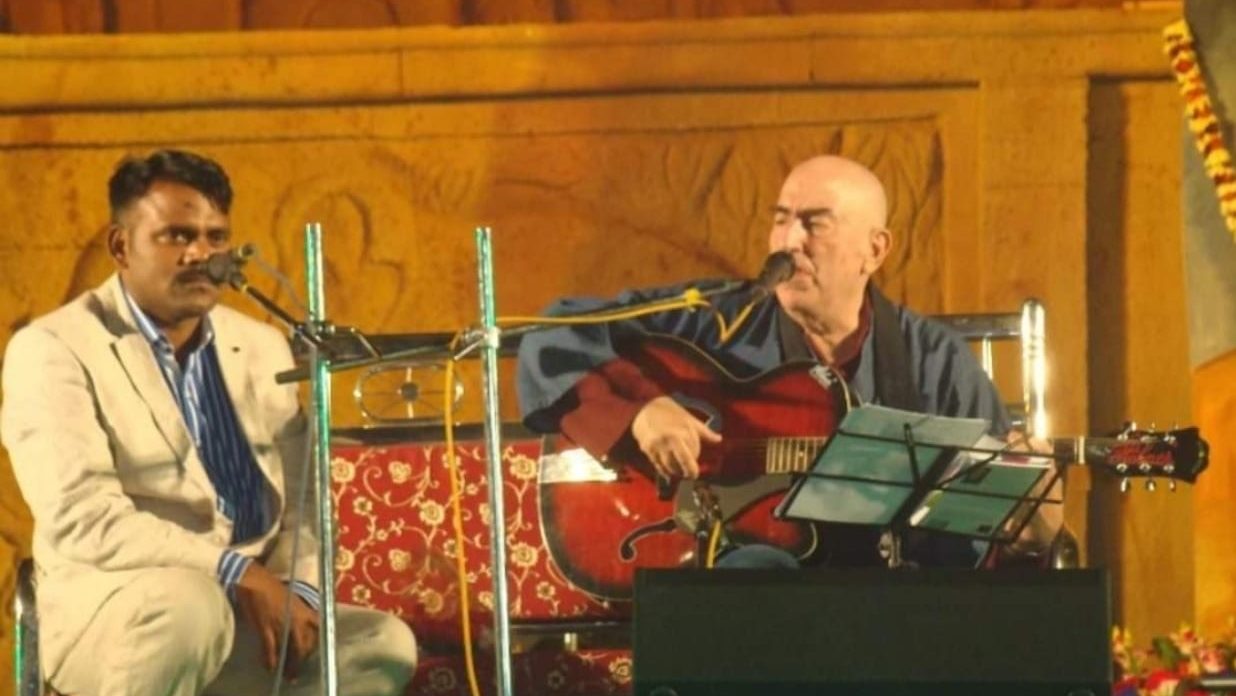
One particularly meaningful experience was our time together in Hungary among Roma communities. Like many Ambedkarite Buddhists in India, Roma Buddhists have found inspiration in Ambedkar’s message of dignity, education, and liberation. We shared meditation, dialogue, and educational programs together, witnessing how Buddhism can create solidarity across cultures.
When I came to Harvard in 2023-26 as a Visiting Scholar and Postdoctoral Fellow with the Buddhist Ministry Initiative, Alan was among the very first people I contacted. Although his health was declining, his generosity remained unchanged.
We had planned to record a long conversation for my interview series, Buddhism Today. Sadly, when we arranged the interview, he was too weak and resting. Only a few days later I received the heartbreaking news of his passing.
I still feel the sadness of not having recorded that conversation. But perhaps the deeper interview had already taken place over twenty years of friendship. Alan taught through the way he lived—with humility, kindness, humor, and unwavering commitment to justice.
Nagaloka’s own tribute to Alan here →
6. From your experience of Ambedkar’s life, what was his relationship with the Triple Treasure?
In my view, the Triple Treasure stood at the very heart of Ambedkar’s understanding of Buddhism.
Although he introduced the term Navayāna, he never intended to create an entirely separate Buddhism. Rather, he sought to recover the ethical and liberative spirit that he believed united the entire Buddhist tradition.
He freely drew insights from Theravāda, Mahāyāna, and other traditions whenever they illuminated the Buddha’s original purpose.
For Ambedkar, Going for Refuge to the Buddha, the Dhamma, and the Sangha was not merely ceremonial. It was a profound existential decision—a complete reorientation of one’s life.
Refuge means trusting wisdom instead of ignorance, ethical living instead of exploitation, and spiritual community instead of social division.
He also appreciated the Theravāda emphasis on ethical discipline and the Mahāyāna emphasis on the Bodhisattva’s compassionate commitment to all beings.
Rather than choosing between them, he integrated both.
Going for Refuge therefore becomes the foundation for transforming both self and society. One cannot genuinely take refuge while remaining indifferent to injustice. Nor can one work for justice without cultivating wisdom and compassion.
For Ambedkar, these two dimensions belong together.
7. What are significant sites for Navayāna Buddhism?
Several places have become deeply significant for Ambedkarite Buddhists because they embody both historical memory and ongoing spiritual practice.
The foremost is Deekshabhoomi in Nagpur, where on 14 October 1956 Dr. Ambedkar embraced Buddhism together with several hundred thousand followers. It remains the spiritual heart of Navayāna Buddhism.
Another important pilgrimage site is Chaitya Bhoomi in Mumbai, where Ambedkar’s cremation took place and where thousands gather annually to pay their respects.
The Ambedkar National Memorial in New Delhi preserves the memory of his intellectual and political legacy.
The Nagarjuna Training Institute (Nagaloka) in Nagpur has become one of the most important international centers for Buddhist education, meditation, and social engagement.
The Dragon Palace Temple at Kamptee has also become an important place of practice, education, and interfaith dialogue.
For me, however, these places are not merely monuments. They are living reminders that Buddhism continues to transform people’s lives through education, ethical practice, community, and compassion.
8. What role does practice-realization play in your life as a Dharma teacher?
For me, practice and realization cannot be separated. In Zen we sometimes speak of practice-realization, and I think that expresses something profoundly Buddhist. We do not practice in order to become awakened at some distant point in the future; rather, awakening unfolds through the very act of practice itself.
As a Dharma teacher, I try to remember that teaching is not primarily about giving information. It is about embodying the Dhamma. Meditation, mindfulness, loving-kindness, ethical conduct, study, and service continually shape one another.
Ambedkar reminds me that inner transformation must express itself in social responsibility, while the Buddha reminds me that social action without inner cultivation can easily become driven by anger or ego. I try to hold these two together.
Whether I am teaching meditation, speaking at a university, leading a retreat, or working with marginalized communities, my aspiration is the same: to cultivate wisdom that naturally expresses itself as compassion.
Ultimately, practice-realization means allowing the Dhamma to become visible in how we listen, how we speak, how we respond to suffering, and how we relate to every person with dignity and self-respect.
9. What was Ambedkar’s relationship to the term Dalit?
Interestingly, Dr. Ambedkar himself rarely used the word Dalit as a primary political identity. During his lifetime, he more often spoke of the Depressed Classes, the Scheduled Castes, or simply the Untouchables, reflecting the language of his historical context.
The word Dalit, meaning “broken,” “crushed,” or “oppressed,” gained wider political and cultural significance after Ambedkar’s death, particularly through the Dalit Panthers movement in the 1970s.
In my view, Ambedkar’s deepest concern was never simply changing terminology. His lifelong struggle was to restore full human dignity. He wanted people who had been treated as “untouchable” to become self-respecting, educated, organized, and free citizens.
This is one reason he ultimately embraced Buddhism. Conversion was not an escape from history but a new beginning. Through the Buddha’s Dhamma, people could move beyond identities imposed by oppression and reclaim their humanity.
So while the word Dalit remains an important political identity for many communities and movements today, Ambedkar’s ultimate vision reached even further. His goal was a society in which no one would need such a label because caste itself would have disappeared. The Buddha’s teaching points toward a community where every person is valued not by birth but by their humanity, ethical conduct, and capacity for awakening.
Metta.
Santosh I. Raut
(Maitriveer Nagarjuna)
Dr. Raut returns to teach Brooklyn Zen Center this fall in a six-week course, B.R. Ambedkar and Navayāna Buddhism: Caste, Liberation, & Engaged Practice, beginning September 13.